Birthday Offering and the Ashton ballet style: insights from Christopher Carr and Ava May Llewellyn
News & Stories 9 May 2026News Story
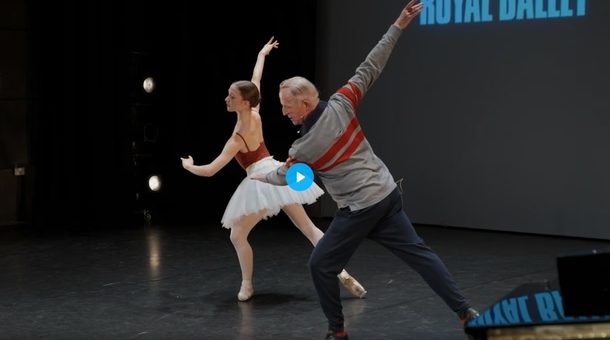
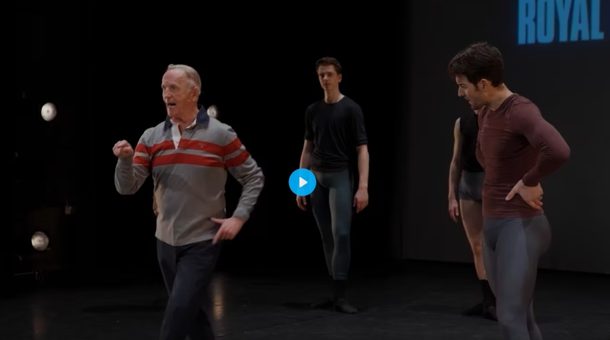
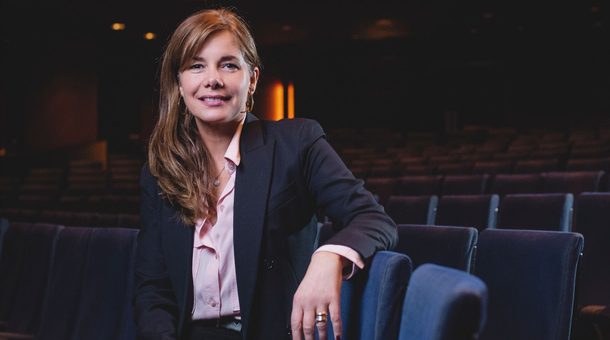
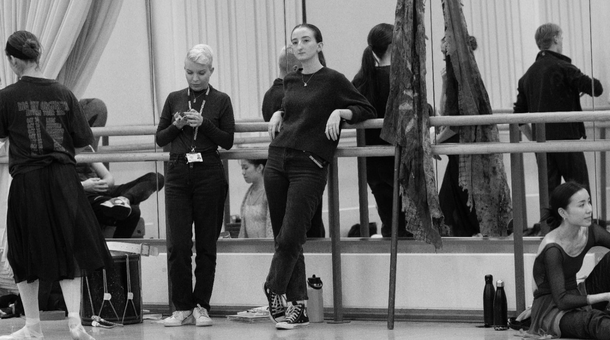
BRB dancer Ava May Llewellyn and Christopher Carr, Guest Principal Ballet Master of The Royal Ballet, share their insights into the nuanced style of Frederick Ashton and the timeless elegance of his celebrated ballet Birthday Offering (1956).
Christopher joined us to rehearse and stage Birthday Offering ahead of performances of our triple bill, 20th-Century Masterpieces, on 19 and 20 June 2026.
Ava May
I would say that Birthday Offering is the pinnacle of Frederick Ashton’s style. As a former student of the Royal Ballet School, we did a lot of work on Ashton repertoire, including what we call the ‘Fred Step’, his signature movement sequence, and by the end of that training you’re really moulded into a dancer who can perform his work quite naturally. It’s what we’re brought up to do.
For me, Ashton’s style is all about the upper body, the épaulement1, the softness, the rounded arms, and the purity of line. It’s very different to something like Balanchine, which is expansive and bold, whereas Ashton is intricate, with fast, detailed footwork and everything connected through the body, including very specific placement of the head and shoulders. Most importantly, it’s incredibly musical. His ballets make complete sense with the music, and you won’t find an Ashton ballet where the movement doesn’t feel totally aligned with the score.
That said, as a dancer, the choreography can initially seem quite fiddly and very precise. When I was an apprentice with The Royal Ballet, I performed in Scènes de ballet, and it was a real challenge to learn because of that precision. But we were coached by Christopher Carr, and by the end the steps and the music felt completely glued into the body. It becomes very organic. I’ve always loved Ashton’s style, particularly because I enjoy fast footwork and using the upper body in that way, and a lot of that comes from my training, especially from teachers like Nicola Katrak, who was incredibly passionate about Ashton’s work. That’s really where my love for it began. I love Ashton ballets, and I’m really excited to see Birthday Offering come together.
1 Épaulement – the gentle shaping and positioning of the shoulders and upper body, including the head, to create expression and elegance in movement.

Christopher Carr
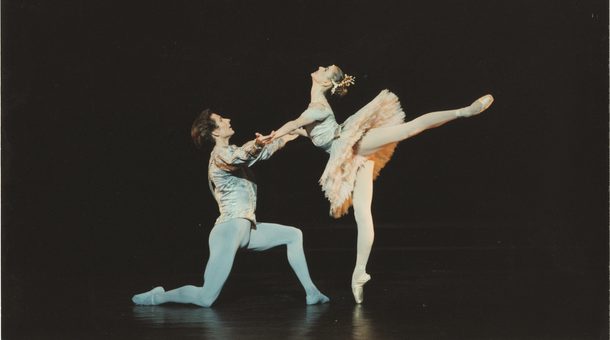
I wouldn’t say there’s a specific Ashton technique. For me, it’s simply pure classical dancing, but incredibly musical, and that’s how I remember his choreography. I can sing most of the ballets in my head because the steps are completely locked into the music, and if I lose the music, I lose the choreography. Birthday Offering is unbelievably clever. You have seven couples, split into groups of four and three, constantly weaving through each other to present the ballerina, and the way those patterns move and reform is just mind-boggling.
I never actually danced in Birthday Offering myself, but I later took it on to rehearse and stage, working on it with companies all over the world. Over the years, I’ve been in the studio with artists like Merle Park, Beryl Grey, Anya Linden, Antoinette Sibley and Monica Mason – all renowned former Royal Ballet dancers and influential figures in its history – and I’ve absorbed a huge amount from them. Even so, it never stops being challenging. It’s a very difficult ballet, especially the opening adage2 with all the promenades3, and Ashton created it on the very best dancers of his time, so that level is still built into it. The physicality is demanding too, with so much body movement, bending sideways, forwards and backwards, on top of very quick footwork, which makes everything more tiring but also much richer.
What I love is that originally there was almost no set at all, just a raised platform, a few steps, and four large candelabras borrowed from an opera production, so it was entirely about the dancing. I did have one moment working directly with Ashton when he choreographed a small number on me and Ross McGibbon: we were peas in a children’s ballet called The Vegetable Ballet, and he had asked me to help him in the studio. In 2024, I was told by Leslie Collier – former ballerina and Répétiteur of The Royal Ballet – that he said I would one day become a very good ballet master, which meant a great deal to me. She actually told me here in one of the offices at BRB, when we came to rehearse La Fille mal gardée in. I went on to spend 25 years as Ballet Master at The Royal Ballet and I still return as a guest ballet master now, so in a way he saw whatever talent I had early on.
For me, Birthday Offering is just heavenly, from the choreography to the costumes to the music, and even the overture gives you a tingle. There’s no story, it’s pure dance, completely interlocked with the music, and there’s just no way you couldn’t enjoy it.
2 Adage – a slow, controlled dance or section of a ballet, usually focusing on balance, strength, and fluid, sustained movement.
3 Promenades (plural) – a movement where the dancer turns slowly on one leg while being supported or guided, often by a partner, to show balance and control.