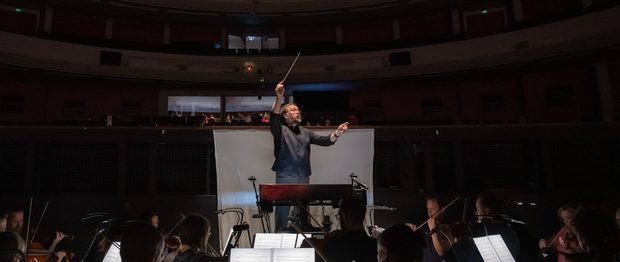
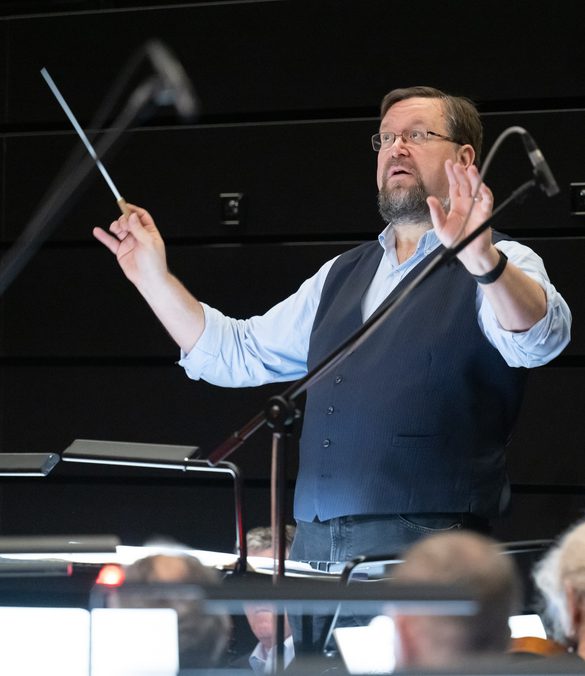
Conductor, Arranger and Orchestrator Gavin Sutherland on Minkus and the score for The Maiden of Venice
News & Stories 7 Jan 2026News Story
With our new production of The Maiden of Venice premiering in the 2026–27 season, we sat down with conductor, arranger and orchestrator Gavin Sutherland to talk about one of the great masters of 19th-century ballet music, Ludwig Minkus, and his score for the original ballet La Bayadère. Gavin is currently arranging Minkus’s music for The Maiden of Venice.
Minkus is a fascinating figure in ballet music history. In many ways, he laid the groundwork for dramatic interpretation in ballet scores, something that was later taken up by Tchaikovsky and others. He sits rather uncomfortably in the middle of that evolution. Don Quixote is really his masterwork, where everything comes together, but La Bayadère is something quite different. It’s a real melting pot of styles.
A lot of the music was written very quickly, very practically. I often describe it as “books by the yard”. There are moments where themes connect characters, but much of it was created to meet immediate choreographic needs: a boys’ variation in a particular key, a set number of bars, written and delivered almost instantly. I know some scholars bristle at that idea, but I’ve seen the manuscripts. You can tell how fast this music was produced.
La Bayadère is also vast. If you were to play every piece ever written for it, end to end, you’d be looking at around four and a half hours of music. Not all of it is by Minkus, but it’s all part of the ballet’s history. That sheer scale is one of the challenges, and one of the reasons the work has been cut, reshaped and reimagined so many times.
When Carlos Acosta first approached me, he was very clear about what he wanted to avoid. He didn’t want to follow the Royal Ballet or Makarova versions that became standard in the West. Those versions largely stem from Rudolf Nureyev staging The Kingdom of the Shades at Covent Garden in the 1960s, with John Lanchbery orchestrating the music. Lanchbery was brilliant, but he was also economical – he rearranged, adapted, and supplemented Minkus using other material he knew well. That model was then reused again and again.
Carlos wanted to go back to the source material and rethink the score afresh for The Maiden of Venice. Thankfully, this wasn’t my first encounter with La Bayadère. I’d conducted it before, and I’d already worked on an “authentic” reconstruction with Alexei Ratmansky in Berlin. That project revealed just how complex – and frankly how politically guarded – the material is. Some of the music exists only in Russian archives that are no longer accessible.
In several cases, the only surviving reference was a poor-quality video. So I did what I’ve done my whole life: sat down with manuscript paper and transcribed the music by hand. It’s not ideal, but sometimes it’s the only way. That process repeated itself for The Maiden of Venice. Carlos would say, “I want this piece, and this one,” and Lars Payne and I would contact companies and libraries all over the world. Often, nothing came back. So once again, it was pencils, paper, and reconstruction.
Image gallery
A gallery slider

Gavin conducting
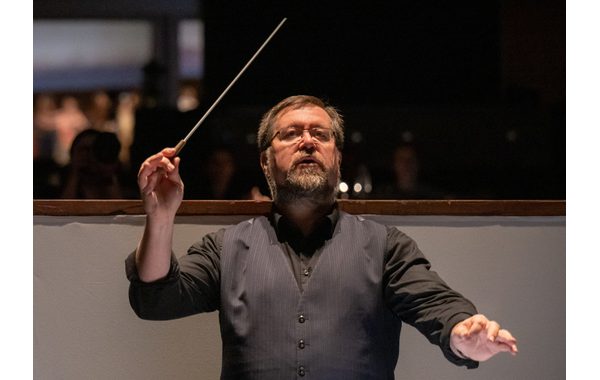
Gavin conducting
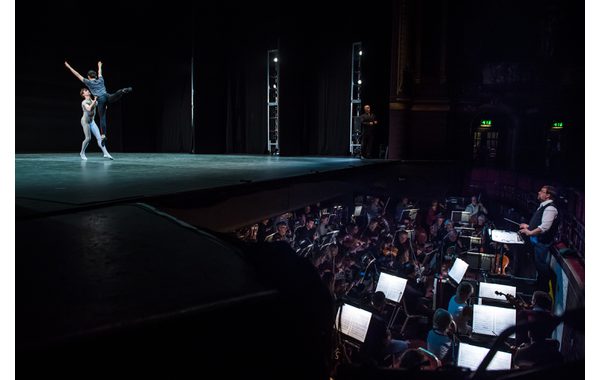
Gavin conducting
What we have now is the score Carlos wants: reordered, trimmed, reshaped, and occasionally re-orchestrated to support his dramatic vision. I sent the piano score earlier this year, and I’m currently working through the full orchestration – tidying, reconfiguring, and occasionally rescoring where necessary. It’s been an 18-month process so far.
This is really where the role of the arranger comes into focus. You start with the composer’s music – that’s the foundation. But ballet scores evolve over time. Pieces are added, sometimes anonymously, sometimes decades later. My job is to work closely with the choreographer to understand the dramatic intent, the structure of the choreography, and what the dancers need musically.
Sometimes, the music simply doesn’t exist for a scene. In those moments, the arranger has to do something quite unusual: become the composer. You take fragments, themes, harmonic language, and stylistic fingerprints, and you create something new that sounds as if it always belonged there. It has to feel authentic.
The process involves finding and verifying material, reconstructing missing sections, orchestrating where no orchestration exists, ensuring all composers are properly credited, and then ruthlessly checking and editing everything. Ballet music has to be ready early. The dancers need it in the studio. And if, at the first dress rehearsal, Carlos says, “That bit’s not working,” you need an answer immediately.
So you’re constantly balancing diplomacy between choreographer and composer, past and present. Thankfully, I don’t do it alone. Paul Murphy has been an incredible support throughout this process. He’s meticulous, knowledgeable, and completely committed. Having someone like that alongside you makes an enormous difference.
And finally, there’s the orchestra. I’ve worked with the Royal Ballet Sinfonia since 1997, and they are quite simply one of the best ballet orchestras in Europe. They know how to make this music live and breathe. No matter how complex the process behind the scenes, hearing it come together in the pit is always the most rewarding part.
The arrangement of Ludwing Minkus’ original score for Birmingham Royal Ballet's The Maiden of Venice was made possible thanks to the generosity of Charles Holloway OBE.
The Maiden of Venice will be made possible thanks to support from Oak Foundation, Aud Jebsen, Charles Holloway OBE and supporters of The Maiden of Venice Giving Circle.
Also Wood & Steven Charitable Trust, Meaghan Grace Productions and Cockayne Grants for the Arts, a Donor Advised Fund, held at The Prism Charitable Trust.