How do dancers train for The Nutcracker? Rehabilitation and Conditioning Lead Esther Parton on her go-to conditioning exercises
News & Stories 7 Nov 2026News Story
Behind the beautiful choreography and seemingly effortless movement of The Nutcracker is an enormous amount of physical preparation. The Snowflakes and Flowers in particular perform repeated sequences of travelling steps, jumps, changes of direction and intricate arm and leg movements, often whilst maintaining precise timing and synchronisation with the rest of the corps de ballet.
Rehabilitation and Conditioning Lead Esther Parton shares three gym-based exercises that help our dancers develop the strength, control and physical conditioning needed to meet the demands of this festive favourite.
Dumbbell lateral lunge
Developing lateral strength and hip stability
How to perform:
- Stand with your feet approximately hip-width apart, holding a dumbbell
- Take a wide step out to the side.
- Bend the stepping knee, pushing your hips backwards, whilst keeping the opposite leg relatively straight.
- Keep your whole foot grounded and your knee tracking in line with your toes.
- Push through the bent leg to return to your starting position.
Perform 8–10 repetitions on each side.
Why this exercise?
Dancers are often incredibly strong moving forwards and backwards, but we shouldn’t neglect sideways movement. The lateral lunge develops strength around the hips and thighs, helping dancers control their weight transfer, maintain alignment and move confidently in different directions.
Pogo jumps
Developing explosive power and the stretch-shortening cycle
How to perform:
- Stand with feet approximately hip-width apart and knees slightly soft.
- Perform a series of small, quick jumps, pushing through the balls of your feet.
- Keep the knees relatively straight but not locked, allowing the ankles to do most of the work.
- Aim for short ground-contact times, bouncing rhythmically rather than jumping for maximum height.
- Maintain an upright posture and land quietly.
Start with 2–3 sets of 15–20 repetitions.
Why this exercise?
Pogo jumps train the stretch-shortening cycle – the ability of muscles and tendons to rapidly absorb and then release energy.
The technique is subtly different from what the dancers already do in petit allegro in that they remain stiffer – putting specific load on the achilles tendon and training its ability to absorb and store elastic energy. This can then nicely transfer into artistic jumping sequences, making the dancer appear more springy as well as protecting against calf and achilles injuries.
For the Snowflakes and Flowers, who perform repeated jumps and travelling sequences, the ability to produce force quickly and recover efficiently between movements is particularly important.
Ballet jumps need to look light and effortless, but they require considerable power. Pogo jumps train the muscles and tendons around the ankle to work like a spring, rapidly absorbing and releasing energy. This helps dancers develop the reactive strength needed for repeated jumps and light, efficient footwork.
Half-kneeling Pallof press
Developing core stability and rotational control
How to perform:
- Kneel on one knee, with the other foot placed forwards, keeping your hips facing forwards.
- Position yourself side-on to a cable machine or resistance band fixed at chest height.
- Hold the handle with both hands close to your chest.
- Ensure you have a neutral spine and that you core muscles are active
- Move your hands straight forwards, resisting the rotational pull of the band.
- Hold for 2–3 seconds before slowly returning your hands towards your chest.
Complete 10–12 repetitions before changing sides.
Why this exercise?
A strong core provides the foundation for almost every movement in ballet. It allows the arms and legs to move freely while the trunk and pelvis remain controlled. This exercise develops the ability to resist unwanted rotation, helping dancers maintain their posture, balance and coordination during complex choreography.
The Pallof press challenges the abdominal muscles, particularly the obliques, to resist rotation whilst maintaining a stable trunk. The half-kneeling position adds an additional challenge to pelvic stability and encourages control through the hips and trunk.
This is particularly useful in ballet, where dancers need to maintain an upright, controlled torso while the arms and legs perform complex movements, and when they have to sit for long periods, such as in the Waltz of the Flowers.
Bringing the three together
Although ballet is often associated with flexibility, grace and artistry, professional dancers require a broad range of physical attributes. Strength, power and stability all play an important role in helping dancers perform at their best. By incorporating complementary gym-based exercises into their training, dancers can develop the physical foundations that allow their artistry to shine through as well as become more resilient to overloading the body and getting injured.

Try it yourself!
Although these exercises have been selected to support the specific demands of The Nutcracker, they can also be useful for anyone looking to develop their strength and conditioning. The exercises target key muscle groups used in dance, helping to build lower-body strength, stability and control. If you're new to these movements, you can start with no or less added weight, and gradually build up as your strength improves. You don't need to be a professional dancer to incorporate some ballet-inspired conditioning into your own routine!
Disclaimer
The exercises featured in this article are provided for general information and educational purposes only. They have been selected and demonstrated by Birmingham Royal Ballet’s Rehabilitation and Conditioning Lead for the specific physical demands of professional ballet and are not intended to constitute personalised medical, physiotherapy or fitness advice.
If you choose to try any of these exercises, you do so at your own risk. Please ensure that the exercises are appropriate for your individual level of fitness, ability and health, and use suitable equipment and resistance. If you are new to exercise, pregnant, have an existing injury or medical condition, or are unsure whether an exercise is suitable for you, seek advice from an appropriately qualified healthcare or exercise professional before attempting it.
Stop exercising immediately if you experience pain, dizziness, discomfort or any other unusual symptoms. Birmingham Royal Ballet cannot accept responsibility for any injury, loss or damage resulting from the use or misuse of the information or exercises featured in this article.
Find out more about The Nutcracker

First time at the ballet? What to expect at The Nutcracker

The characters of The Nutcracker

The history of The Nutcracker: Conductor Thomas Jung on the origins of Tchaikovsky's magical score

The story of The Nutcracker
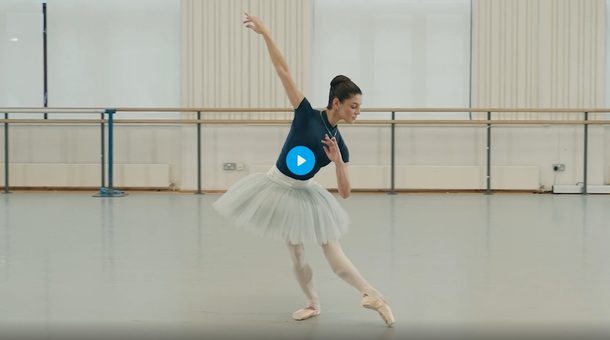
WATCH: Sofia Liñares rehearses the Sugar Plum Fairy solo

The Nutcracker 2026 Principal Casting announced

Meet Rupert – one of our youngest stars in The Nutcracker!

Heavenly tunes of The Nutcracker

The Nutcracker: A view from the wings

Insight: Luca Mollica on The Nutcracker

Beatrice Parma wins Dancer of the Year 2025!

Behind the scenes with Drosselmeyer
