How to perform under pressure: Yaoqian Shang and Max Maslen on achieving a peak performance mindset in Don Quixote
News & Stories 23 Feb 2026News Story
Principal Dancers Yaoqian Shang and Max Maslen talk about performing the challenging, virtuosic roles of Kitri and Basilio in Carlos Acosta’s Don Quixote under pressure, drawing on their years of stage experience and the mindset they’ve cultivated to perform at their peak.
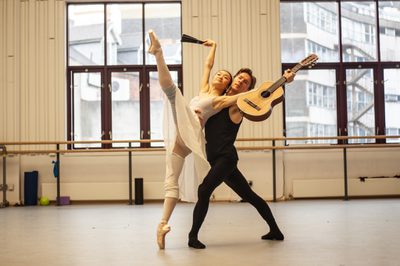
Yaoqian and Max have been long-time dance partners, and in this run of Don Quixote they perform together as the title couple, Kitri and Basilio.
Yaoqian Shang, Principal Dancer
Preparation is the foundation of how I perform under pressure. It gives me confidence in knowing what I’m doing, but it isn’t only about the technical elements. It’s also about understanding how I want to make an entrance, how I intend to shape the character, and what I want to communicate on stage. Becoming fully accustomed to the character I’m playing is essential when navigating the unpredictability of live performance.
In a role like Kitri, I often try to discover something slightly different each time I perform. My first performance of Kitri was completely unexpected: I received a call on a Saturday morning in 2022 asking if I could step in that evening to perform, which meant I wouldn't be dancing with my usual partner, Max, but with Brandon [former BRB Principal Brandon Lawrence] whom I hadn't rehearsed with. I was still in bed when the call came, and it was a shock; we only had a short rehearsal before the show. Yet in many ways, the situation helped me. I tend to overthink and analyse my dancing, and when things don’t happen exactly as imagined – which is simply the nature of live performance – it can be unsettling. Being placed in that moment without time to over-analyse forced me to stay present, and that presence allowed the performance to unfold naturally.
Because of the spontaneity of the situation, I found myself embracing what was happening rather than resisting it. This was particularly helpful in this ballet, which is full of life and character rather than purely classical precision. When something doesn’t go perfectly, there is space to transform it, to play with the moment, and to create something engaging for the audience. Letting go of the expectation of perfection is important, especially in a full-length ballet filled with solos and pas de deux. Wanting to do your best is vital, but expecting absolute flawlessness throughout is not realistic.
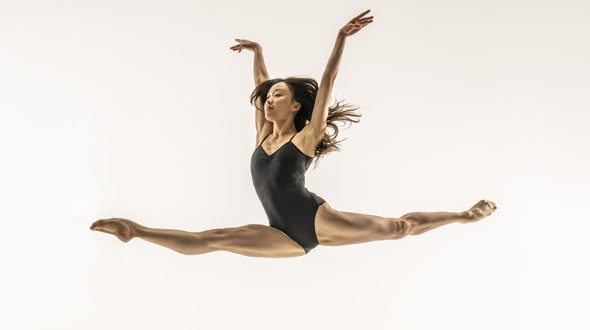
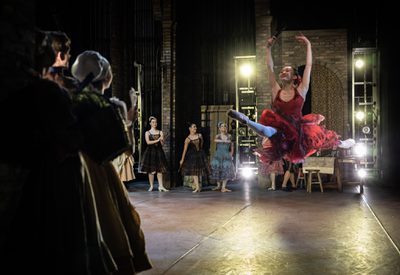
Focusing on enjoyment is especially helpful in Don Quixote. Even though the choreography is highly virtuosic, there is freedom and joy within the movement. It requires a brave mindset to allow the performance to unfold and trust where it leads. That bravery is necessary in a role that shifts between fiery virtuosity and classical refinement, demanding both energy and trust.
Alongside mindset, I rely on grounding habits. Since my earliest competitions as a student, I have taken three deep breaths before going on stage, something my teacher encouraged from the beginning. This helps me feel centred, which is essential for a role requiring turns and jumps that depend on relaxation in the upper body. Too much tension restricts movement and drains your energy. Before performing, I warm up with a barre to prepare for my Act I entrance – a solo full of jumps and turns – without exhausting myself, and I make sure to fuel my body consistently with snacks so I can sustain energy throughout the performance.
Ultimately, preparation and a genuine connection to the character matter most. When my focus is on storytelling and presence rather than anxiety about technique, the experience becomes more productive, more joyful, and far less burdened by pressure.
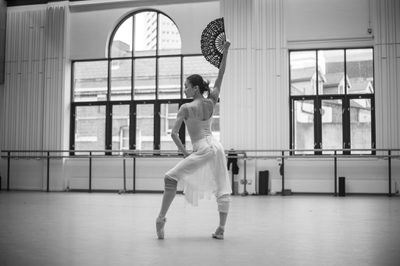
Max Maslen, Principal Dancer
For me, the key to performing under pressure lies in doing all the technical thinking before the performance ever begins. That preparation happens in rehearsals, in class and in the spare moments where details are refined. By the time I step on stage, I don’t want to be thinking about steps or mechanics. Instead, my focus can shift to character, stagecraft, storytelling and connection – with my partner and with everyone sharing the stage.
That way of approaching performance has come gradually with time and experience. It isn’t something that changes overnight, and it can feel quite daunting to let go in that way. I can’t pinpoint exactly when it began to feel right; it simply evolved. Dancing this role with Yaoqian makes that transition easier. From our very first rehearsal, it felt natural to connect not only technically, but within the world and story of Don Quixote. Having now performed these roles before, and with greater experience as dancers, our rehearsals allow us space to build layers of character and storytelling alongside the technical and partnering work. Reaching that stage in the process feels both rewarding and creatively fulfilling.
I can still get a bit nervous before performances sometimes, which I think is entirely natural. For me, it’s a positive kind of nerves – it shows that I care. Yet as soon as I begin getting into costume and putting on stage make-up, a sense of readiness settles in. It isn’t arrogance, but rather the quiet confidence that comes from weeks of preparation and the knowledge that the only thing left to do is go on stage, enjoy the moment and give everything to it.
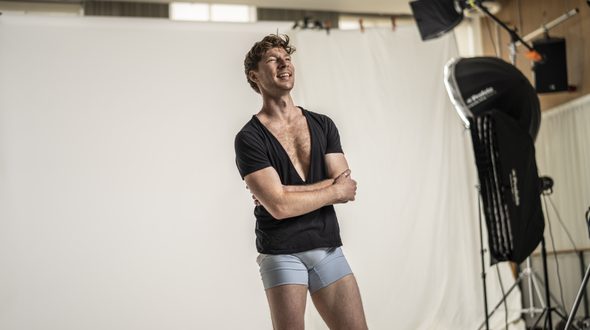
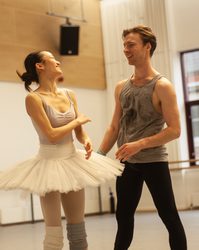
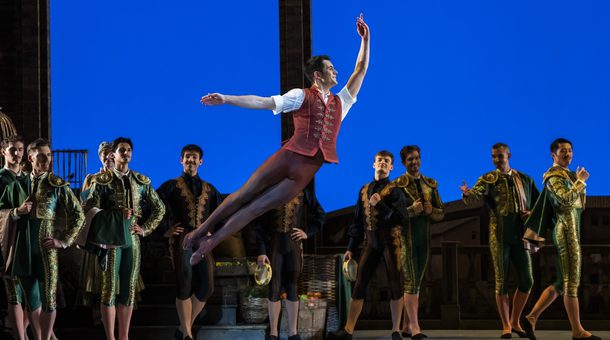
Basilio’s first entrance is far from gentle, and it can feel as though I’ve been launched onto the stage. Five years ago, that intensity would have frightened me, because it demands complete physical readiness from the very first second. Now, I try to embrace it. Rather than overthinking the technical difficulty, I focus on dancing through the character, even in the most virtuosic sequences. The moment I step on stage and see my partner and colleagues, I’m reminded that I’m not alone. There is real support in that shared space.
Earlier in my career, a mistake on stage could have unsettled the entire performance. In a full-length, three-act ballet, however, one imperfect pirouette is only a tiny fragment of the whole. Dancers can be intensely self-critical, and even a small wobble can feel enormous, but experience brings perspective. What truly defines a performance is the ability to continue, to own the moment and move forward. There have been times when a solo hasn’t ended exactly as planned, yet I have still taken a bow with complete conviction, because the audience is not there to watch disappointment. They come to experience live theatre, with all its unpredictability and vitality.
One of the challenges of performing fewer shows as a Principal is maintaining consistency from day to day. You might feel physically exceptional on a Tuesday and know a performance would go brilliantly, only to wake up on Wednesday, the actual performance day, with heavy legs or turns that feel less secure. Learning to show up regardless, and to deliver a performance in changing circumstances, is something that develops through experience and through understanding your own routine. Reaching a point where that routine feels settled brings a sense of stability that is invaluable on stage.
Find out more about Don Quixote

Don Quixote: thank you!
WATCH: Mathias Dingman performs Basilio
WATCH: 'A Day in the Life' on tour with Hannah Martin
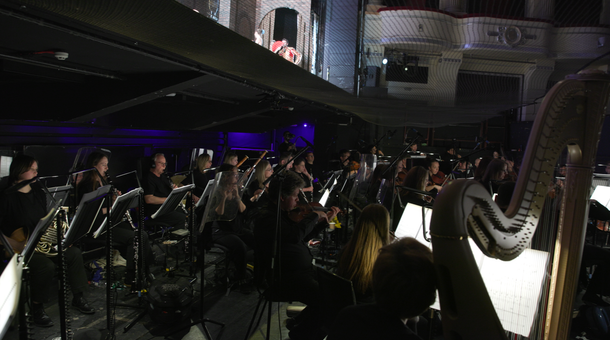
Fascinating Facts: Don Quixote music
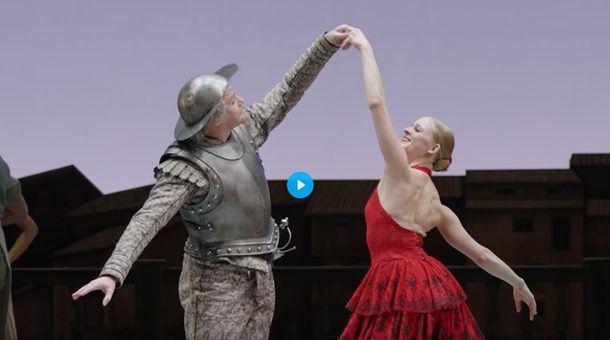
WATCH: Jonathan Payn on performing the title role in Don Quixote
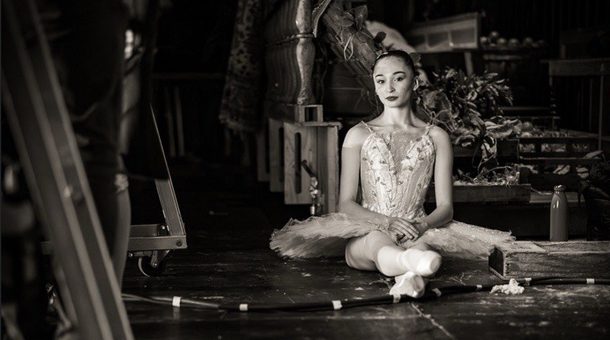
Yasemin Kayabay: Don Quixote tour diaries
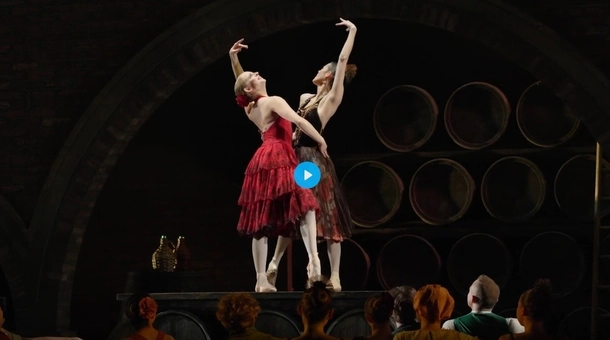
WATCH: Kitri and Mercedes in Act III
Alisa Garkavenko: 'Get Ready With Me' for a performance of Don Quixote
Hannah Martin on debuting as Kitri's Friend in Don Quixote
WATCH: Lachlan Monaghan on the character of Espada in Don Quixote
WATCH: Lachlan Monaghan performing Espada in Don Quixote
FANtastic Flash Mob in Plymouth – A Sizzling Spanish Success!