News Story
From emergency repairs in the wings to preparing hundreds of costumes before the curtain rises, Costume Technician Jess Cave takes us behind the scenes of a typical show day at BRB, revealing the teamwork, skill and split-second decisions that help every performance run seamlessly.
I'm Jess, and I'm a Costume Technician at Birmingham Royal Ballet, part of the touring costume team. I've just completed my first full season with BRB, and no two show days are ever quite the same.
Starting the day
A show day usually begins with the laundry from the previous performance. We unload the washing machines, get everything into the dryers, iron anything that needs pressing and sort all the costumes ready for the day ahead.
After that, we begin preparing for the next performance. Throughout a run, we keep a running list of costume notes, whether that's alterations because the casting has changed, repairs to rips and tears, or replacing fastenings that have worked loose. Each morning we'll look through those notes, decide what needs to be prioritised, and work out which costumes are being worn that day. If something isn't needed for another couple of performances, we know we have a little more time to work on it.
Image gallery
A gallery slider
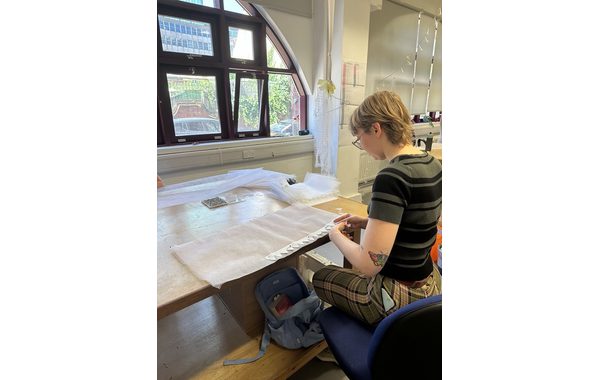
Jess at work, cutting material for the scalloped edges of a tutu.
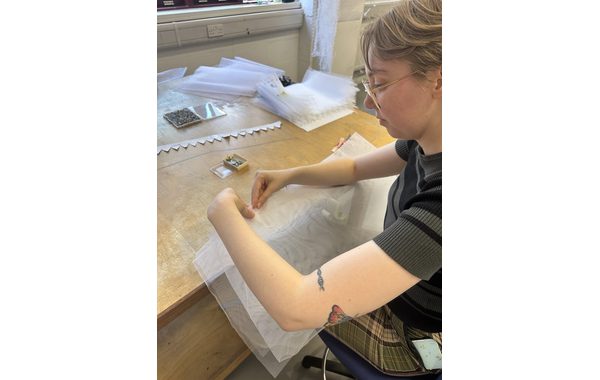
Jess at work, cutting material for the scalloped edges of a tutu.
Setting the show
Alongside all of that, we also have to 'set the show'. For us, that means preparing every dressing room so each dancer has exactly what they need for that performance. We make sure the correct costumes, headpieces and accessories are all in the right place before the dancers arrive.
Each Costume Technician is responsible for their own costume plot, which is essentially a section of the production. It's usually divided into Principal women, corps de ballet women, Principal men and corps de ballet men. You're responsible for setting, maintaining and keeping track of every costume within your plot throughout the run.
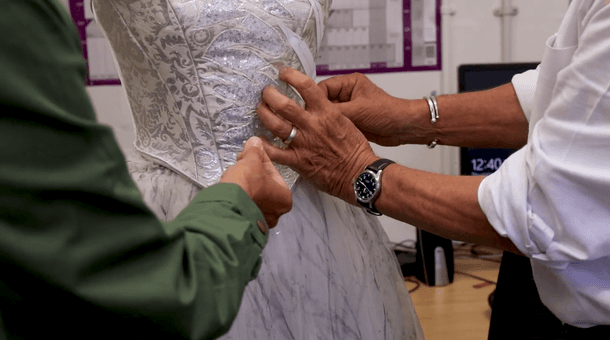
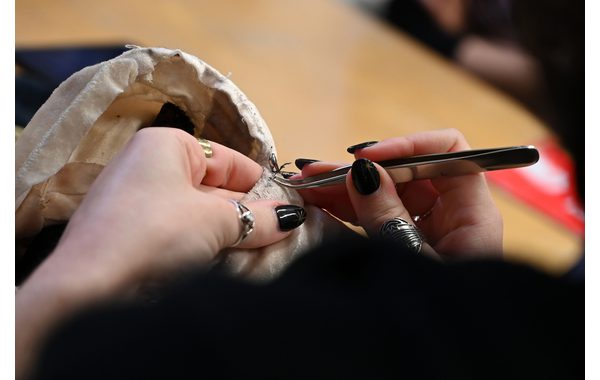
As we set costumes, we're constantly checking them over. Every fastening, hook and bar has to be secure, and we're always looking for any new damage that might have appeared during the previous performance. If it's a quick repair, we'll fix it there and then. If it needs more time, we'll set it aside and come back to it once everything is ready for the show.
Once the curtain goes up
When the performance begins, we're backstage throughout the entire show. We each have our own quick-change plot, helping dancers change costumes in a matter of seconds between entrances. During the intervals we'll carry out any urgent repairs, and if we have a spare moment, we'll continue working through our repair list or start preparing costumes for the next performance.
Sometimes fastenings break just before a dancer goes on stage, and we'll literally have to sew them into their costume. At the end of the performance, we'll cut them back out again. You never quite know what's going to happen, which is why we're always on standby.
Always prepared
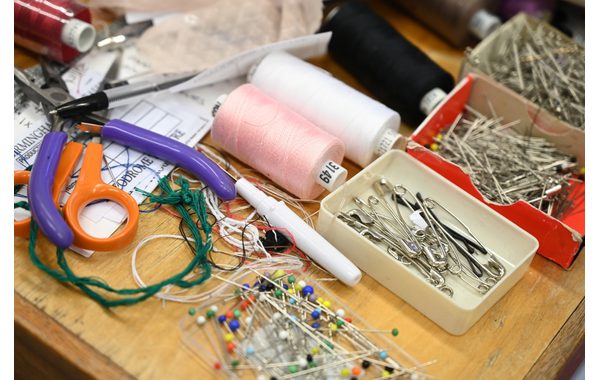
Every Costume Technician wears a pouch stocked with everything we might need for an emergency repair, including threaded needles in black, white and skin-coloured thread, spare buttons, safety pins and other essentials. We also wear head torches so we can see what we're doing in the dark backstage.
One of the most common emergency repairs? Men's trousers! Split seams happen far more often than you'd think, so we've become very good at sewing them back together at the side of the stage, often with only a minute before the dancer has to make their next entrance.
Those moments can be incredibly intense. You're working against the clock, trying to repair a costume as quickly as possible while the dancer is still wearing it, so there's a huge amount of trust involved. We have to work carefully, quickly and accurately, and afterwards your hands are often shaking with adrenaline.
Image gallery
A gallery slider
After the final bow
Once the performance finishes, the day isn't over. We collect all of the costumes, start the laundry, make any repairs we can and prepare everything ready for the next show. If it's a double-show day, we do it all over again.
They're long days. On a double-show day we'll often start around 10am and finish close to 11pm, but it's all part of making sure every performance runs as smoothly as possible.
Life on tour
Touring is very similar to working at our home on Thorp Street, except we have to bring much of our workshop with us. We tour our own dryers, washing equipment and other essential kit because every venue is different, and not all of them have the facilities we need. With the amount of laundry our productions generate, we simply couldn't manage with a single washing machine or dryer, for example, so setting up and packing down our equipment becomes part of every tour.
The best part of the job
Show days are definitely my favourite. They're the busiest, the most challenging and the most rewarding. Every performance brings something unexpected, and I love knowing that, behind the scenes, we're helping make the magic happen.