News Story
Did you know that Tchaikovsky’s score for Swan Lake was once considered too difficult to dance to? His groundbreaking approach to ballet composition challenged the conventions of the day, placing emotional storytelling at the heart of the music.
Here, BRB Music Director Paul Murphy explores the story behind Tchaikovsky’s score, the criticism it faced and the legacy it has since established in the ballet repertoire.

Julius Reisinger (1828-1893) was a Czech choreographer and dancer. He choreographed the first stage production of Swan Lake with Tchaikovsky in 1877 at the Bolshoi Theatre, Moscow, where he was ballet master between 1871-1878.
Tchaikovsky’s score was groundbreaking as it focussed on emotional storytelling rather than the more commonplace frothy scores of the day which were composed primarily to display ballet technique and virtuosity. It was also symphonic in nature and deployed various musical devices such as leitmotifs.
It would seem that Reisinger’s limitations as a choreographer were almost boundless. The work wasn’t a great success at its premiere and Tchaikovsky laid a lot of the blame on the choreographer. The music was regarded as complex for its time and, quite simply was beyond Reisinger’s ability. In fact, he even substituted music by other composers as Tchaikovsky’s music was deemed 'too awkward to dance' in places.

In addition, he forced the Tchaikovsky to write a Russian Dance which had no place in the narrative. This number has now found its way into the concert hall as a virtuosic showpiece for solo violin and rarely appears in contemporary productions of the ballet.
However, Tchaikovsky cared for the work deeply and sadly didn’t live to see its global success which was launched after its revival in St Petersburg in 1895. Tchaikovsky’s brother, Modest, together with the composer Ricardo Drigo and the choreographers Marius Petipa and Lev Ivanov, reordered and edited some of the music, altered the narrative, and created deeply moving and stylish choreography, much of which remains in numerous productions today.
Swan Lake is a deeply emotional musical masterpiece and, despite its precarious origins, enjoys its global status as one of the most popular and technically demanding classical ballets in the repertoire.

Find out more about Swan Lake

WATCH: Swan Lake from above

223 Pointes: the pointe shoe swan sculpture inspired by BRB's Swan Lake
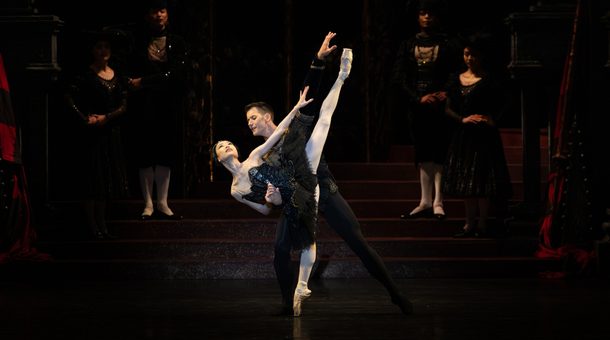
WATCH: Black Swan pas de deux from Swan Lake (Act III)

WATCH: Carlos Acosta on why pointe shoes matter

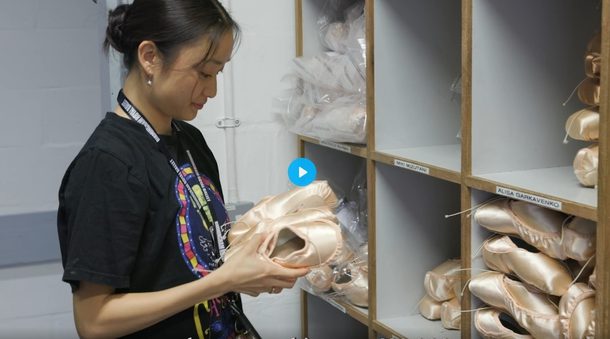
WATCH: dancer Yasemin Kayabay prepares her pointe shoes (ASMR)

WATCH: audiences react to Swan Lake

WATCH: Swan Lake Performance Trailer

Swan Lake: first look
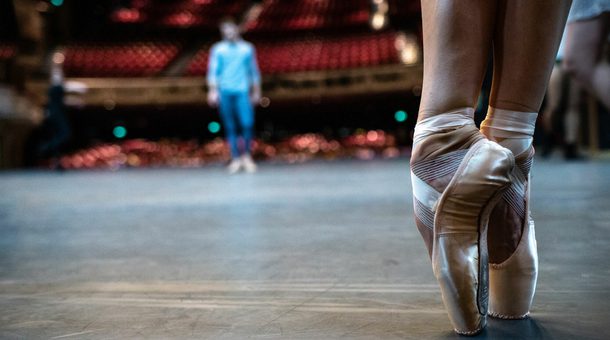
Behind the pointe shoes: a day with Footwear Supervisor Michael Clifford

The Jerwood Centre: the strength behind every step in Swan Lake
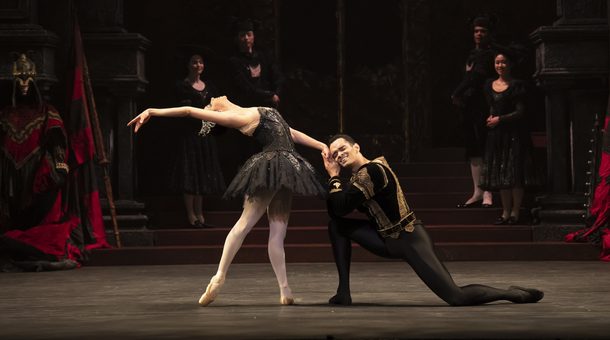
WATCH: Swan Lake Act III coda in rehearsal
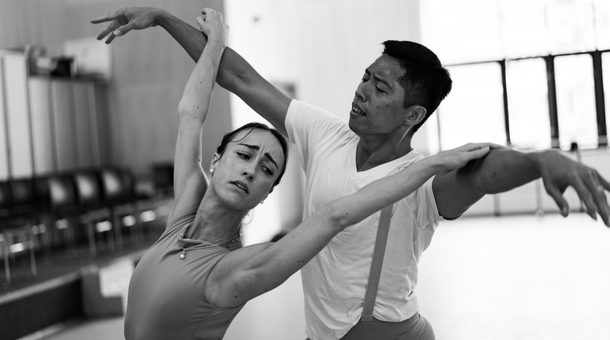
Swan Lake: rehearsal photo gallery