News Story
After more than two decades with BRB, Samara Downs has begun a new chapter as Répétiteur. From joining the Company at 19 to dancing a wide range of roles across some of ballet’s most-loved works, Samara reflects on her career and the experiences that have led her to this new role.

I was a Royal Ballet School girl, going all the way through White Lodge and Upper School before joining Birmingham Royal Ballet at 19. I’ve been at BRB ever since, gradually working my way through the ranks and experiencing a really broad range of roles, from corps de ballet and Soloist work through to Principal roles. It’s given me quite a rounded career. When I first joined, we were doing a lot of Bintley, Balanchine and van Manen works, and then there was Ashton, MacMillan, Cranko and so much more. We did a bit of everything, which gave me the opportunity to experience a really wide range of choreography and styles. Looking back, I feel very fortunate to have had that breadth of experience.
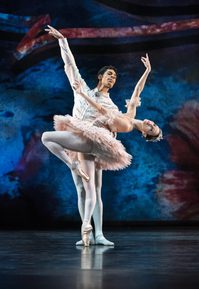
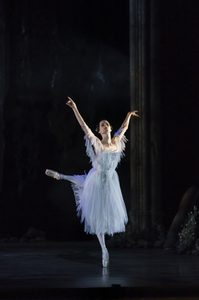
A career filled with stories
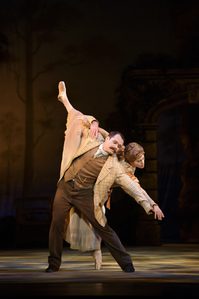
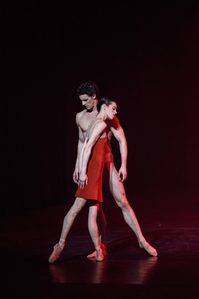
I’ve been lucky enough to dance some pretty amazing ballets over the years. I’ve performed some fabulous one-act works such as In the Upper Room (Twyla Tharp), Carmina Burana (Bintley) Concerto (MacMillan), Grosse Fuge (Van Manen), Enigma Variations and A Month in the Country (Ashton) as well as lots of Balanchine works like Slaughter on Tenth Avenue, Serenade and many different triple bills. Later in my career, I started taking on Principal roles in dramatic works and three act ballets, which I found especially fulfilling, not only working in partnership with the leading man, but also carrying the weight of the production in terms of the narrative of these story-driven works. Swan Lake was particularly special because of the incredible emotional journey the characters go on, culminating in the most beautiful of final acts, where you just have to leave everything you have on stage.
La Fille mal gardée was another favourite. It’s just divine to dance and is so romantic whilst being choreographed with impeccable comedic timing. I also loved dancing many of David Bintley’s ballets such as Hobson’s Choice, Carmina Burana, and Shakespeare Suite, but also other roles like Princess Epine in The Prince of the Pagodas, who has one of the best on-stage deaths of any ballet I’ve come across! There have been many highlights, and I think what I’ve enjoyed most is having the opportunity to experience such different ballets and roles throughout my career and having some really special working partnerships on and off stage along the way. But alongside the dancing, another part of the ballet world gradually started to capture my attention.
Discovering Benesh Movement Notation
During my career, I was fortunate to work with, and be exposed to, not only the most formidable coaches but also our highly experienced choreologists in the studio. Our choreologists weren’t only recording choreography for new works, but were often running rehearsals and working directly from Benesh Movement Notation scores. I found that fascinating. The language system really interested me and it seemed like such an amazing tool to be able to navigate the many facets of putting on a work, so about seven years ago I decided to start learning it alongside my dancing. I completed the theoretical course with Benesh International part-time before going on to do my Professional Diploma during my sabbatical.
As I learned more, I began to realise just how useful a tool it could be. Benesh Movement Notation is invaluable for group work because it allows you to simultaneously navigate many dancers’ tracks and keep abreast of the huge amount of detail involved with such efficiency. It is also a key resource when reviving works, and is critical for recording the intention of movement, which can often be difficult to decipher from videos alone. A myriad of differences will surface from multiple videos of the same dance, and without a BMN score, this leaves a lot of uncertainty as to what the choreographer actually wanted, or how the work developed over time. Meanwhile I’ve been lucky enough to receive first hand some amazing coaching throughout my career, and there is so much knowledge held by individuals that could otherwise be lost if it is not recorded systematically using a shared language. Being able to record that knowledge using BMN means it can be passed on, rather than that information being held by just one person with the potential for that real lived experience to be lost.
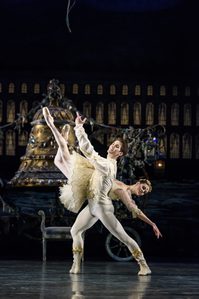
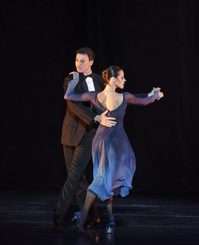
The path to Répétiteur
I did my ballet teaching qualification quite a while ago, but I quickly realised that I wanted to focus on working in the professional environment as my passion lay in Répétiteur-based work and in really getting to know a ballet in depth. I love delving deeply into a work, whether that’s through studying videos and different interpretations or looking at the Benesh notation score. You’re able to explore the choreography in such detail and understand not only the steps themselves, but their intention.
I’ve also been fortunate to be part of the Frederick Ashton Foundation’s pioneering Stagers Programme, and using Benesh Movement Notation as a resource for reviving legacy pieces is central to that work, sitting alongside their shadowing scheme. One of the things I find so valuable about the notation scores is that you’re not having to start your study of a work from scratch. A huge amount of analysis has already been assimilated into the score, as there is so much thought and detail that goes into recording every movement. You’re almost standing on the shoulders of giants, as it allows you to take that knowledge and use it in your own teaching and staging. It’s an incredible tool, and I love having that reassurance of accessing and building on previous knowledge. At the end of last year, management approached me about transitioning into the role of Répétiteur, and it felt like the right time.
A new chapter
For me, the role is about facilitating. It’s about being part of a team that helps the dancers and the Company function to the best of their abilities. At the moment, I’m coaching the Principals on a very individual level. They’re incredibly passionate about doing their absolute best, and if I can support them to do that, then I’m happy. On a broader level, it’s about teaching daily ballet class, challenging people and supporting them to improve along their own trajectories. That’s really what I see the role as being about.
I’m also continuing to develop my work as a stager through the Frederick Ashton Foundation’s fantastic Stagers programme, gaining experience in leading the staging process for whole ballets which, together with my work within the team at BRB, is helping me to grow in that capacity, which is really exciting. After spending so much of my life at Birmingham Royal Ballet, first as a student and then as a dancer, moving into this new chapter feels like a natural progression. I’m able to take everything I’ve learned throughout my career, from the roles I’ve danced and the people I’ve worked with to the knowledge I’ve gained through working as a choreologist and the mentoring and training I’ve received from the Frederick Ashton Foundation, and use it in this new capacity. I’m not leaving my career as a dancer behind. I’m taking all of that experience with me, and I’m excited to see where this next chapter takes me.
Find out more about Samara
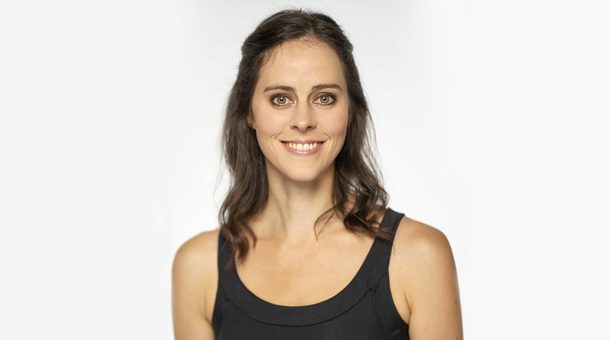
Principal Dancer Samara Downs to become Répétiteur
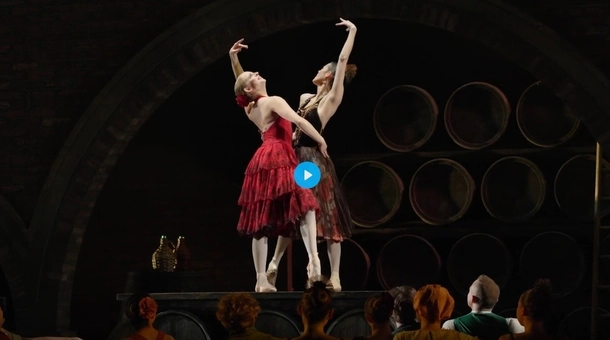
WATCH: Kitri and Mercedes in Act III
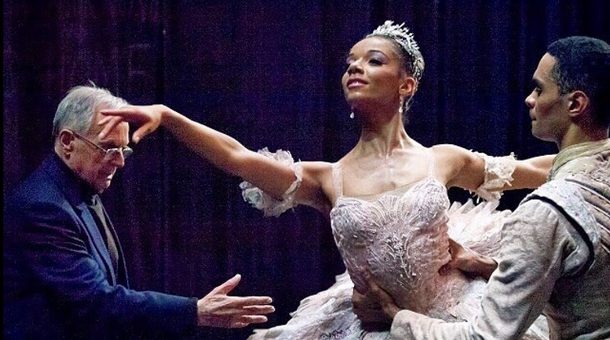
'2026 is the new 2016' at Birmingham Royal Ballet
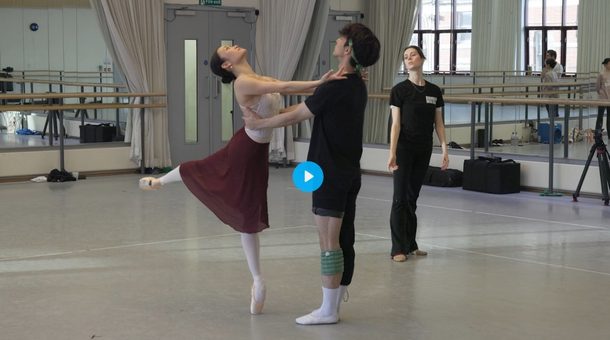
WATCH: Samara Downs on reconstructing Frederick Ashton's Scène d'amour
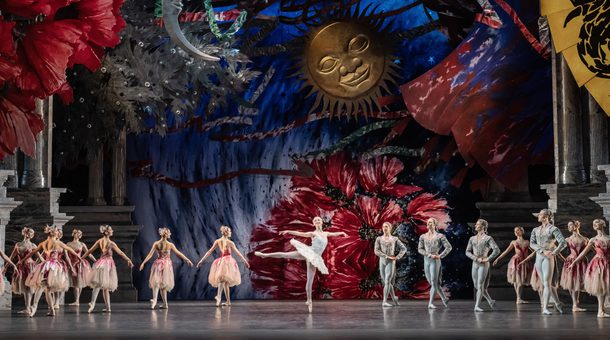
Nutcracker Principal casting announced

Auditions: Female Classical Dancers

Birmingham to Venice

WATCH: the making of the Cygnets in Swan Lake

WATCH: inside Céline Gittens’ pointe shoe preparations for Swan Lake

The history of The Nutcracker: Conductor Thomas Young on the origins of Tchaikovsky's magical score

WATCH: Amelia Thompson performs one of the Act I Courtesan solos from Swan Lake

Junior Roar attend the Jacksonville Jaguars Game at Wembley Stadium