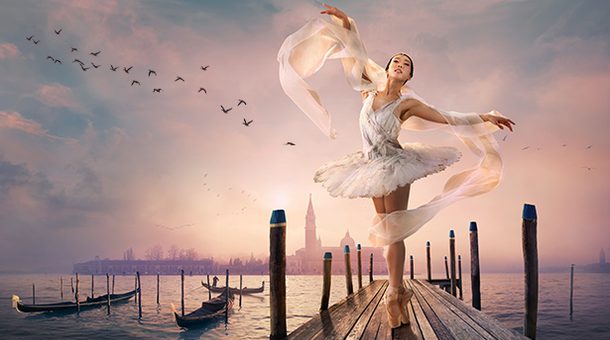
How do you embody a swan? Répétiteur Laëtitia Lo Sardo on what it takes to perform Swan Lake
News & Stories 6 Aug 2026News Story
Répétiteur Laëtitia Lo Sardo discusses the qualities, technique and stylistic nuances of embodying a swan on stage in the timeless classic Swan Lake. Drawing on years of experience, she provides a fascinating insight into what it takes to bring these graceful characters to life.

I'm Laëtitia Lo Sardo, a Répétiteur with BRB, and I'll be rehearsing the Company in Swan Lake ahead of performances from 23 September.
The first time I performed Swan Lake was in 2001, and I was incredibly lucky to learn it from Galina Samsova. Then, when Birmingham Royal Ballet last performed the ballet in 2023, it became the first production I coached in my new role after retiring as a dancer. One piece of advice has stayed with me ever since. When choreographer Sir Peter Wright heard I would be coaching Swan Lake, he said, ‘Please make sure the port de bras1, the Swan arms, are really strong, and not floppy’. That perfectly sums up one of the most important qualities of performing a Swan. It's very easy to make the arms look soft or decorative, but swans are incredibly powerful animals. If you watch them take flight, there's enormous strength behind every movement. That's what we try to capture on stage. The arms should feel expansive and full of purpose, never weak.
What's fascinating is that the Swans are still women. During the day they're trapped under Rothbart's spell, only returning to their human form at night. They carry sadness, fear and hope with them throughout the ballet. The lake itself is made from their tears, so they're constantly surrounded by a reminder of their loss. That humanity is what audiences need to see. Yes, they're swans, but underneath they're women longing to be free. When Prince Siegfried first appears, they don't know whether he's friend or foe. There's fear in their eyes because, from their perspective, he's arrived ready to hunt them. Even without words, there's so much emotion being communicated.
1 Port de bras – literally translates from French to 'carriage of the arms'. It describes the way a dancer moves and positions their arms.
Image gallery
A gallery slider
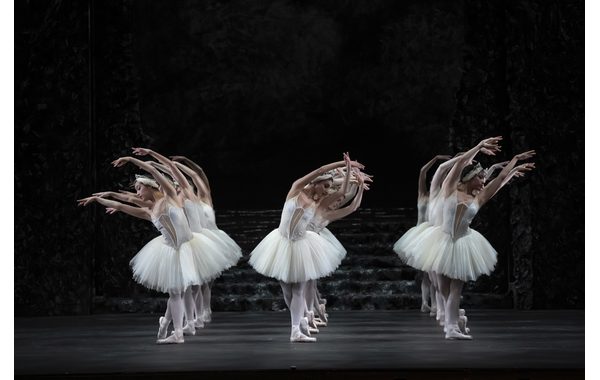
Artists of Birmingham Royal Ballet in Swan Lake.
© 2023 Credit : Bill Cooper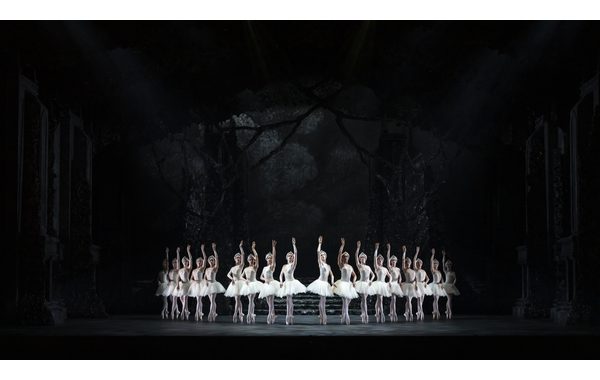
Artists of Birmingham Royal Ballet in Swan Lake.
© 2023 Credit : Bill Cooper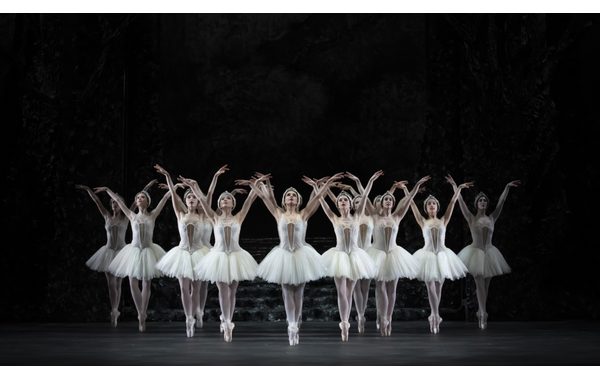
Artists of Birmingham Royal Ballet in Swan Lake.
© 2023 Credit : Bill CooperMime plays a huge role in Swan Lake, particularly in Act II when Odette tells Siegfried her story, and one of the wonderful things about these great classical ballets is that every movement has meaning. The choreography isn't simply beautiful steps. Every gesture helps tell the story, so as a dancer you're constantly thinking about what you're communicating to the audience. Technically, the swan quality comes from much more than just the arms. Galina taught us that what defines the Swan version of fourth2 and fifth positions3 is the outward rotation of the wrists combined with a lift through the upper back. The neck stays long, the shoulders remain open and the épaulement4 creates that unmistakable swan silhouette.
There are photos of Anna Pavlova with swans, and they always come to mind when I think of portraying the bird. They remind me of that beautiful length required through the neck and the sense of quiet melancholy. Even when the Swans in Swan Lake appear still, they're never resting. The elbows stay lifted, the arms remain alive and the ‘feathers’ are always active. Sir Peter's version has a very distinctive quality – the emphasis for the port de bras is on the lift. The arms rise with strength before floating gently down again. Even when the Swans run across the stage, they're led by the chest with the arms reaching behind, creating that elegant, sweeping shape.
The footwork is just as important as the upper body. The movements have to be incredibly sharp and precise while still looking completely effortless. That's especially true for the Cygnets, where every step has to be executed with absolute accuracy while maintaining the illusion of ease. It's one of the reasons these roles are so demanding.
Synchronisation is another defining feature of Swan Lake, particularly for the corps de ballet. Every line of the body, every fingertip and even the direction of the eyes is carefully placed and meticulously rehearsed so the Swans move as one. There is a count for every movement, sometimes even a quarter count, ensuring each gesture is perfectly timed. When it's done well, the audience doesn't see the precision behind it. They simply see one seamless, unified flock of Swans.
2 Fourth position of the arms – one arm is held overhead while the other is held either in front of the body or open to the side, depending on the style and choreography. Here, Laëtitia is referring to the version where the lower arm is rounded in front of the body (in first position).
3 Fifth position of the arms – both arms are held rounded overhead, creating an oval shape above the head.
4 Épaulement – the gentle shaping and positioning of the shoulders and upper body, including the head, to create expression and elegance in movement.
Image gallery
A gallery slider

Yaoqian Shang as Odette. Here, her arms are in the fourth position Laëtitia refers to.
© 2023 Credit : Bill Cooper
Yaoqian Shang as Odette, her arms in the open fifth position Laëtitia refers to.
© 2023 Credit : Bill CooperFor dancers, Swan Lake is one of those ballets everyone dreams of performing, but it's also one of the hardest in the classical repertoire. Whether you're dancing Odette and Odile or one of the corps de ballet Swans, it's incredibly demanding. I still remember finishing a Saturday matinee, taking off my costume during the break and wondering how I was going to dance the evening performance. There are long sections where you can't move, your arms have to stay alive, your supporting foot is cramping, you're dripping with sweat, and then suddenly you're expected to launch straight back into demanding choreography. It's exhausting. But that's also why it's so rewarding. There's such depth to every role that it never feels routine. Every time you perform it, you discover something new and continue refining your craft.
Tchaikovsky's score is a huge part of that experience. It still gives me goosebumps. By the later acts, both the audience and the dancers have been on such an emotional journey, and the music carries you through. It's powerful, heartbreaking and endlessly beautiful. In addition, Sir Peter Wright is an extraordinary storyteller. One of my favourite moments comes at the end of Act IV when Rothbart is defeated. The Swans suddenly turn on him, leading with their heads and necks just as real swans do when they attack. Then the music changes as the spell begins to break, the Swans leave the stage and Odette and Siegfried ascend together into the heavens. It's beautifully simple, incredibly moving and pure theatrical magic.
Find out more about Swan Lake

WATCH: the making of the Cygnets in Swan Lake

WATCH: inside Céline Gittens’ pointe shoe preparations for Swan Lake

WATCH: Amelia Thompson performs one of the Act I Courtesan solos from Swan Lake

Swan Lake: the story behind Tchaikovsky's 'undanceable' score

WATCH: Swan Lake from above

223 Pointes: the pointe shoe swan sculpture inspired by BRB's Swan Lake
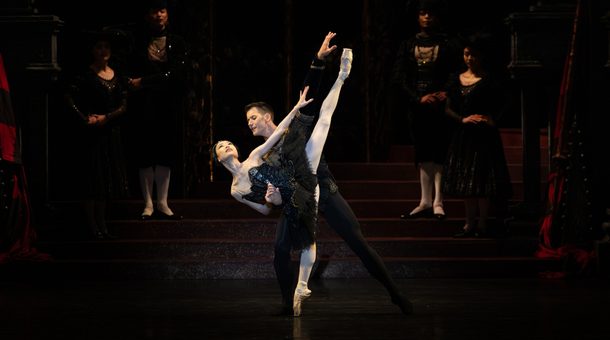
WATCH: Black Swan pas de deux from Swan Lake (Act III)

WATCH: Carlos Acosta on why pointe shoes matter

WATCH: dancer Yasemin Kayabay prepares her pointe shoes (ASMR)

WATCH: audiences react to Swan Lake

WATCH: Swan Lake Performance Trailer

Swan Lake: first look