News Story
We're taking a closer look at the context behind The Green Table, discovering the remarkable story of choreographer Kurt Jooss and his company, Ballet Jooss, as they worked through one of the most turbulent periods of the 20th century.
Kurt Jooss (born 1901) played a defining role in the development of 20th-century dance theatre, combining classical ballet with the expressive intensity of German Ausdruckstanz – an early form of modern dance focused on conveying emotion and inner experience rather than formal technique. His choreography prioritised clarity, structure and narrative, often engaging directly with the political realities of his time. This is most evident in The Green Table (1932), a work that confronts the futility and human cost of war through a series of stark, episodic scenes.
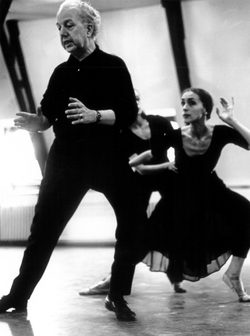
Jooss's commitment to artistic and moral integrity had real consequences. He refused to dismiss the Jewish members of his company, Ballet Jooss, or allow his work to be shaped by Nazi ideology.
As pressure intensified, the company was forced to leave Germany in 1933. Their escape was a close call: their departure for England was brought forward by just one day, narrowly avoiding interception by Hitler’s forces. It was a moment that not only secured their safety, but ensured the continuation of Jooss’s work at a critical point in history.
Once in England, Jooss quickly re-established his company, working first at Dartington Hall in Devon, where he rebuilt his ensemble and continued creating. The hall, a 14th-century estate that nurtured artists of all kinds, was owned by Dorothy and Leonard Elmhirst; Dorothy offered residence to Jooss and Ballet Jooss after taking pity on the company’s situation. There, he established a base and a school for the company. From Dartington, they toured extensively throughout the 1930s, including highly successful international tours to Europe and the USA, gaining recognition for their distinctive style and politically engaged work.
However, the outbreak of World War II in 1939 disrupted this momentum. Jooss was deported to Chile in 1940, at a time when German nationals in England were either interned or deported. Dartington Hall also became a protected area following the evacuation of Dunkirk in 1940, when parts of the south of England were requisitioned for wartime use. Despite this, he was able to return to England in 1942, likely with the support of his British connections in the arts, where he resumed his work and regrouped his company in Cambridge. It was here that Sir Peter Wright, our Founding Director Laureate, began his career as an apprentice to Kurt Jooss at the age of 16. He went on to join Sadler’s Wells Theatre Ballet, later becoming Director and leading the Company’s move to Birmingham.
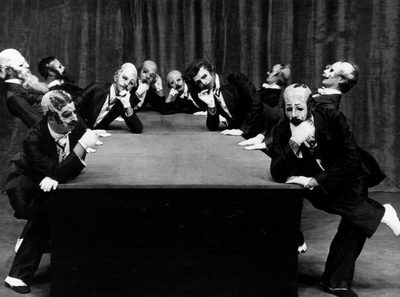
Jooss's time in exile and on tour helped cement his international reputation, and his influence would go on to shape generations of dancers and choreographers, including Sir Peter. Today, The Green Table stands not only as a landmark of 20th-century choreography, but as a work deeply rooted in the circumstances in which it was created.
*Information taken from Sir Peter Wright's memoir, Wrights and Wrongs: My Life in Dance
The Green Table is supported by donations from Mr Stuart Sweeney and Fern & Clive Potter.
Find out more about The Green Table
20th-Century Masterpieces: performance photo gallery
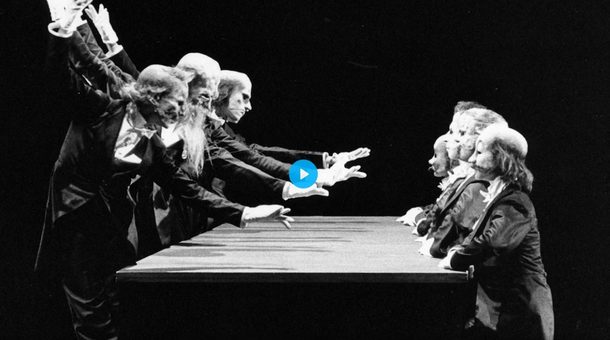
WATCH: Guest Répétiteur Jeanette Vondersaar on The Green Table
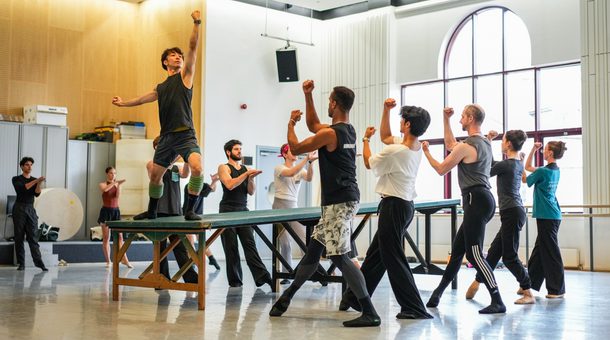
WATCH: The Green Table rehearsal video
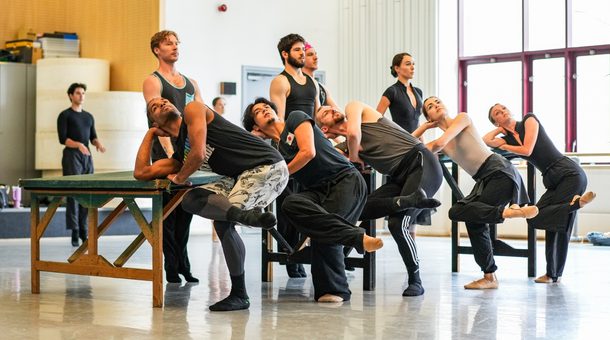
The Green Table: rehearsal photo gallery
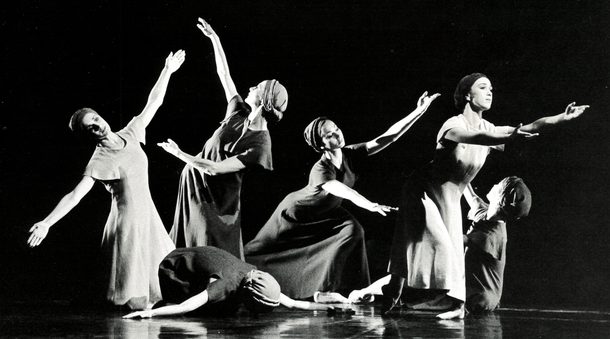
The Green Table: 1990s archive photo gallery
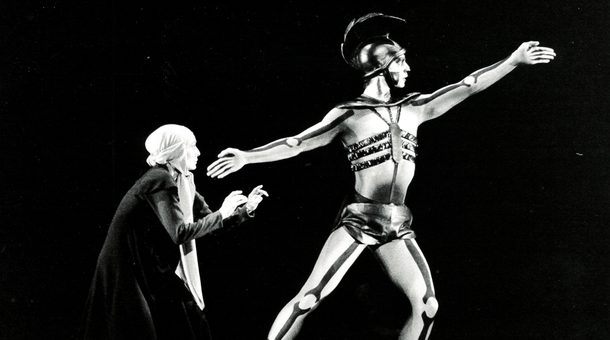
Sir Peter Wright and The Green Table
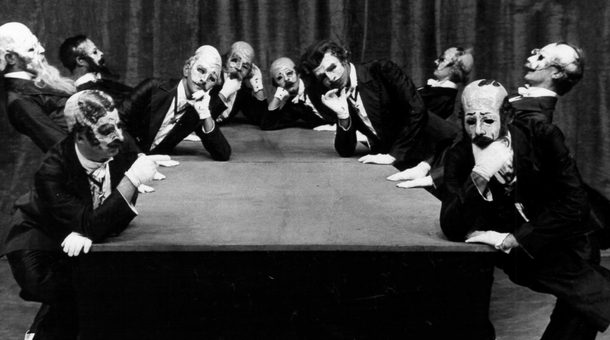
Introducing The Green Table