Darcey Bussell on her time at Birmingham Royal Ballet and Frederick Ashton's Birthday Offering
News & Stories 5 Jun 2026News Story
Former Prima Ballerina of The Royal Ballet and 'Strictly Come Dancing' judge Darcey Bussell reflects on the start of her career with BRB and on performing Birthday Offering, highlighting the artistry, musicality and legacy of Sir Frederick Ashton's celebrated ballet.
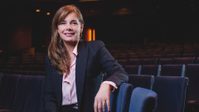
When I graduated from school, I went straight into Sadler’s Wells Royal Ballet, now Birmingham Royal Ballet, based at Sadler’s Wells Theatre. It was my first company and it had a huge impact on me. Everything I learned there – the ethos of the Company, working under Sir Peter Wright, and the people I danced alongside, made it a truly transformative period in my life. I was very fortunate to join a smaller company, because there was such a strong sense of community and support. That bond really helped build my confidence as a young dancer and very quickly, I found myself stepping into roles I could never have imagined dancing in my first year. I had opportunities to perform soloist and principal roles, which was incredibly exciting. It constantly challenged and tested me, but it was also incredibly joyful, exciting, and opened many doors.
I remember my first major tour with the Company vividly. We travelled to Hong Kong, Beijing, Shanghai and Thailand, and at 18 years old I had never been away without my parents before. Suddenly, I was on an international tour for nearly two months. It was exhilarating and fascinating in equal measure. I quickly realised I had to pace myself, because there was so much work and so much to absorb, but it remains one of the most exciting experiences of my career. I’ll never forget it.
Image gallery
A gallery slider
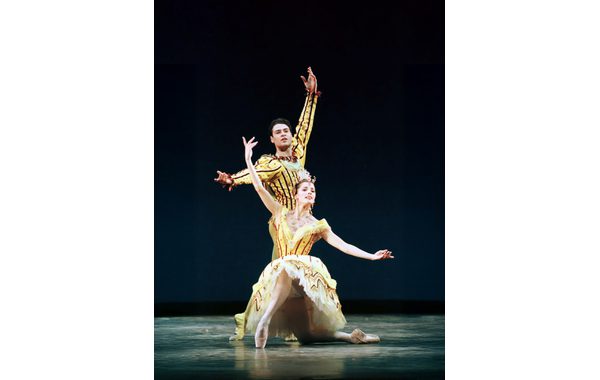
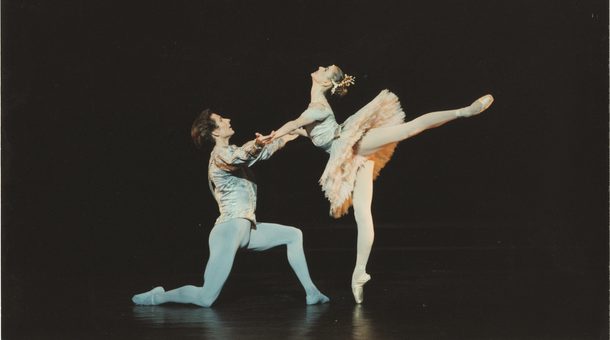
Darcey Bussell and Iñaki Urlezaga in Birthday Offering.
© 1998 Credit : Nigel Norrington / ArenaPAL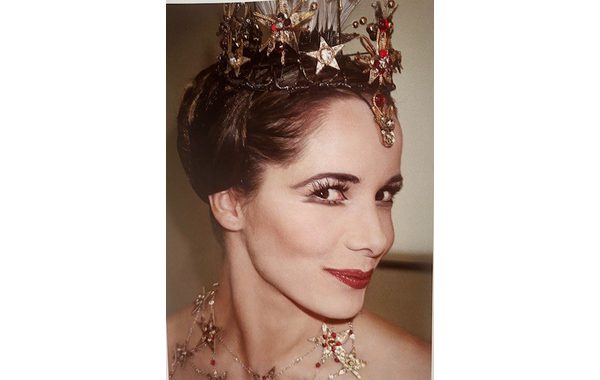
Darcey Bussell backstage during a performance of Birthday Offering.
© 2002 Credit : Mario TestinoBirthday Offering is a one-act ballet that feels very much like a showpiece. With its costumes and grandeur, it evokes what many people imagine to be the golden age of classical ballet. When Sir Frederick Ashton created it, he had an extraordinary group of Principal Dancers at his disposal, and I think the ballet reflects that beautifully. Each female variation is completely different and highlights the individuality and artistry of the dancer performing it. I danced the variation originally created for Svetlana Beriosova (the third solo in the ballet), which is more lyrical in quality. All of the solos are technically demanding in their own way, but what makes the ballet so special is how everything comes together as a whole.
The costumes, by Peter Farmer, are also incredibly distinctive and they immediately affect the way you move. They shape the manner of the choreography, the use of épaulement, port de bras and the softness of the bend through the body – all hallmarks of Ashton’s style. As soon as you put them on, you instinctively understand the world of the ballet and how the role should be approached.
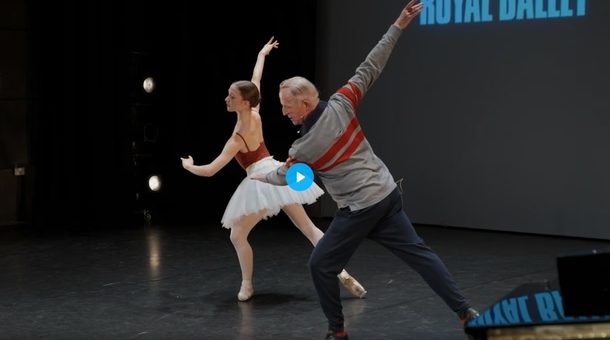
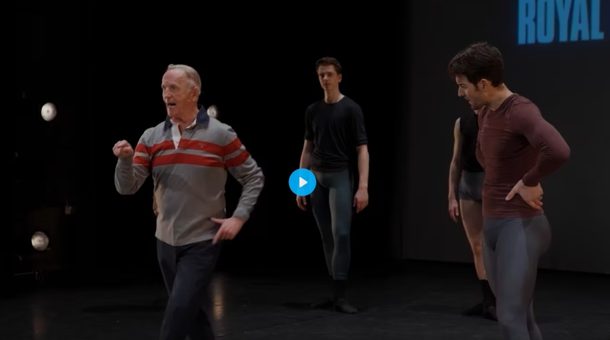
Alongside the solo, I performed the pas de deux, which I recently had the pleasure of coaching for BRB for a special event. The Company also performed it at a gala for the Royal Academy of Dance in 2025, so it was lovely to revisit the ballet again in different settings. Whenever you return to a work like Birthday Offering, you notice more of its unique qualities and details. The pas de deux in particular highlights Ashton’s musicality and the way he celebrated the individuality and artistry of his dancers.
In my mind, the ballet has always felt a little like a carousel. The way the dancers enter and move in circular patterns across the stage reminds me of carousel horses travelling around together! There is something wonderfully theatrical and decorative about it, especially with the costumes and headdresses. I always felt as though we were like show horses, not racing, but there to embody elegance and beauty. That has always been my personal interpretation of the piece!
1 Épaulement – the gentle shaping and positioning of the shoulders and upper body, including the head, to create expression and elegance in movement.
2 Port de bras – movement of the arms.
Image gallery
A gallery slider
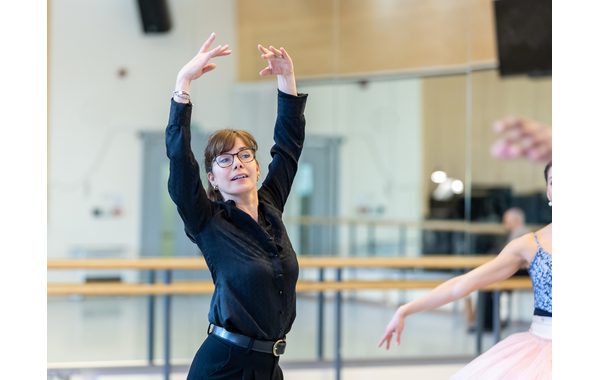
Darcey coaching BRB dancers in 2024.
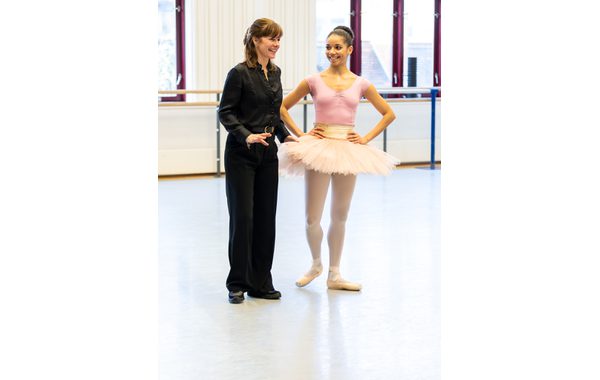
Darcey coaching Céline Gittens in 2024.
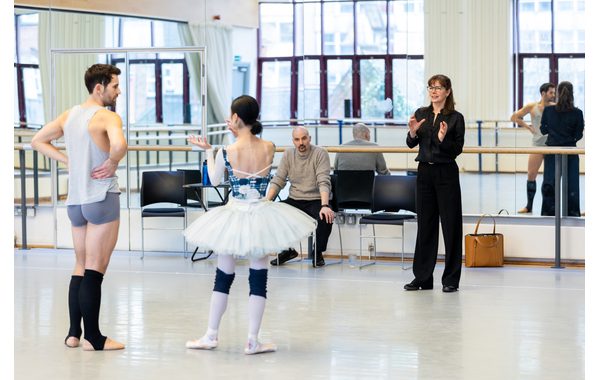
Darcey coaching Mathias Dingman and Momoko Hirata in 2024.
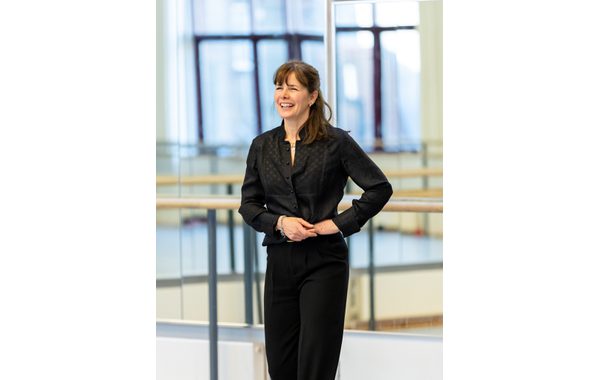
Darcey coaching BRB dancers in 2024.
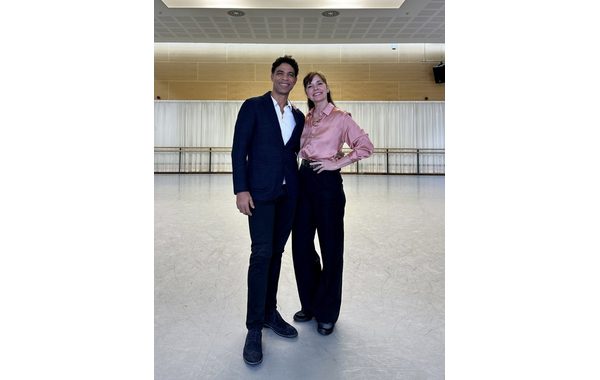
Darcey with Carlos Acosta.
Although I found the ballet technically challenging, it was also incredibly uplifting and joyous to dance. What I loved about it was that it never felt dated. Instead, it felt as though you were stepping into something important, a tradition with real beauty, value and history behind it. I always felt very aware of that when performing it.
Jonathan Cope was one of the partners I danced the pas de deux with, and I also performed it with Adam Cooper and Iñaki Urlezaga. I remember dancing Birthday Offering in New York shortly after the birth of my second child. She was only about five months old at the time, and I remember thinking, ‘Right, now I have to go on stage and really show my technique.’ That performance became particularly meaningful to me because it was one of the first major performances I gave after becoming a mother for the second time.
I actually performed Birthday Offering with The Royal Ballet rather than with Sadler’s Wells Royal Ballet, but I have incredibly fond memories of it. That’s a lovely thing, because with so many ballets dancers often come away thinking they could have done more or performed better. Birthday Offering is a difficult ballet to dance well, especially the pas de deux. In Ashton’s choreography, you can never bend enough, and in those costumes you had to keep that softness and fluidity all the time.
There are some particularly difficult moments technically. In the pas de deux there is a section where you bourrée while fully backbent, supported by your partner. From there, you have to transition seamlessly out of the backbend and rise directly into a penché. Doing that while maintaining complete control and giving the impression of ease is extremely challenging. At the end of the pas de deux there is also a beautiful sense of stillness, with the bourrées circling almost like a doll turning in a jewellery box. It is surprisingly difficult in that moment to maintain a sense of strength and presence, because the choreography asks for such delicacy and restraint. Then the music builds and you arrive at the final balance, which is unusual for Ashton. He was so musical and so refined as a choreographer that he was never interested in showing off virtuosity for its own sake or turning movement into an acrobatic feat. Even in a ballet as celebratory as Birthday Offering, everything always comes back to musicality, elegance and artistry.
3 Bourrées (plural) – a series of very small, quick steps, usually done on demi-pointe or pointe, that make the dancer appear to glide across the floor.
4 Penché – a movement where the dancer tilts the body forward while lifting one leg high behind them, often creating a long balancing line.
We are performing Birthday Offering as part of our 20th-Century Masterpieces triple bill on 19 and 20 June 2026. Book your tickets now before they're gone!