Dealing with injury as a ballet dancer: insights from Hannah Martin and Nick Allen
News & Stories 7 May 2026News Story
Artist Hannah Martin and Clinical Director Nick Allen discuss the challenges of injury, how dancers deal with them, and how BRB’s Jerwood Centre assists in the recovery process.
Hannah Martin
I’ve had two surgeries since joining the Company in 2020, and both experiences were incredibly challenging. Injury is perhaps one of the hardest things a dancer can face. Not only does it take you away from what you love, it can also shake your sense of identity. At the same time, though, there can be something valuable in that experience. Being forced to step away from ballet pushes you to discover who you are beyond it. For me, that brought a greater depth of character and, ultimately, a deeper sense of artistic expression when I returned. In many ways, my injuries made me a more complex dancer. Experiencing life outside the studio, and the emotional difficulty of not being able to do what I love, added new layers to my performance and a richness I didn’t have before.
Looking back, I can see those injuries as a turning point. I came back with a renewed appreciation for my work, my body, and the importance of taking care of it. When you leave ballet school, you often expect your life to revolve around eight or nine hours of dancing every day, but that kind of intensity isn’t always sustainable or balanced. While there are periods in the Company where the workload is naturally demanding, it becomes your responsibility as a dancer to find that balance for yourself. That’s something I’m still learning, setting not only physical boundaries around how much I can push my body, but also emotional boundaries around how I approach my art and how much I give to it. Ballet isn’t just physical. It is deeply mental as well. Avoiding burnout requires care for both the body and the mind.
There were a few key things that helped me most during my recovery. Firstly, having a strong support network was essential. It is very easy to become isolated when you’re injured, especially when you are not in class or on tour with the rest of the Company. Making a conscious effort to stay connected, and to build a community outside of dance, made a huge difference. For me, that was largely through my church. Having that support helped me rediscover who I was beyond ballet, which ultimately gave me more confidence when I returned to dancing.
Secondly, I learned how to listen to my body in a more intuitive way. Of course, it is important to take on professional advice, but equally important is tuning into how your body feels day to day. I started doing regular check-ins with myself. When I was returning to rehearsals, I would look at my schedule and decide how much energy I could realistically give, not just physically, but mentally as well. I used to approach everything at full intensity all the time, which is not sustainable. Now, I work with much more intention. Managing your body well is not just about working hard, it is about working intelligently.
Finally, I gained a much deeper understanding of the importance of rest and nutrition. Good sleep and proper fuelling are fundamental to recovery and performance, something I wish I had fully appreciated earlier in my training. It is still something I am developing. I used to be very rigid in my routines, but I have come to realise that flexibility is just as important as consistency. It is not about losing discipline, but about adapting to what your body needs in different moments and seasons. Consistency and flexibility can, and should, work together.


Dr Nick Allen
When I first joined the organisation, I realised I had brought certain assumptions with me from my background in Olympic sport. At that time, injury was often normalised. There was an expectation that you would push your body to its limits, and with that came a sense of personal ownership over injury and recovery. What has been interesting in the dance environment is how much that mindset has evolved. Dancers today are far more aware, and our approach to injury is highly individualised. We recognise that every dancer responds differently, both physically and psychologically.
In ballet, performance is deeply tied to technique, so we often aim to reintroduce ballet-specific work as early as possible in rehabilitation. However, that approach does not suit everyone. Some dancers prefer to rebuild strength and fitness first before returning to technical work. Our role is to adapt the process to the individual, rather than applying a single model. In general, rehabilitation follows a series of phases. In the early stages, the primary focus is the injury itself. We ask what the current limiting factor is, and often that is the injury. At that point, our priority is clinical rehabilitation, using the appropriate treatments and interventions to support recovery. Alongside this, we also consider two other key areas: what caused the injury, and what the dancer ultimately needs to return to. The cause might be a strength imbalance, a technical issue, or another underlying factor. The final objective could be anything from jumping and lifting to full performance on stage.
As recovery progresses, the injury becomes less of a limiting factor. At that stage, greater emphasis shifts to addressing the cause, reducing the risk of recurrence. Strength training, conditioning, and corrective work become increasingly important. Eventually, the focus moves towards performance readiness. The key question becomes whether the dancer can meet the demands of their role. For example, if a dancer needs to return to pointe work, we must ensure the body, particularly areas like the calf, is prepared for that load. This is where technical rehabilitation becomes central. We work closely with artistic staff to reintroduce specific elements of technique, building gradually from individual coaching to company class and then into rehearsals. By the time the dancer returns fully, each component has already been addressed in a controlled and progressive way.
This structured, incremental approach is not only important physically, but psychologically as well. Injury often brings a fear of recurrence. By breaking the process down into stages, and testing each component along the way, dancers gain confidence in their bodies again. They can see their progress and understand what is required at each stage. We also place a strong emphasis on giving dancers a sense of ownership, and each rehabilitation plan is mapped out clearly, with defined stages and objectives. For example, if a dancer is aiming to return for a specific performance, we can work backwards from that date. We consider how long they need in class at full capacity, how long to prepare for jumping, and how long the body needs to heal from the injury itself. In this way, we work with two timelines. One is biological, based on how long tissues need to recover, and the other is functional, based on the demands of performance. If those timelines align, a return is realistic. If they do not, it becomes clear that more time is needed.
Throughout this process, we use objective measures, such as strength testing, to guide decisions and reduce risk. At the same time, we recognise that every dancer’s journey is different. Some may need more physical support, others more psychological support. We are fortunate to have access to clinical psychologists where needed. Ultimately, what matters most is that the dancer feels in control and confident in their return. Our role is to guide and support, but the process must belong to them.
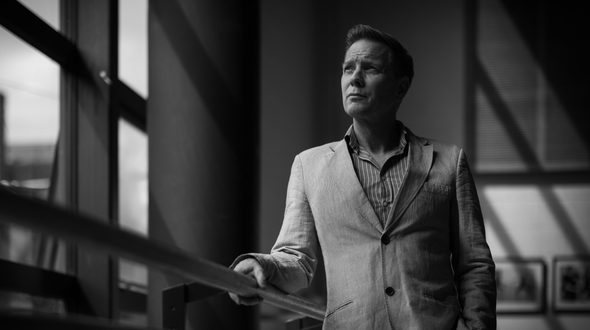
Listing image (c) @ha55ellhoff
Find out more about The Jerwood Centre
Fuel for performance: inside dancer nutrition at Birmingham Royal Ballet
The Jerwood Centre: supporting dancers on tour
Announcing a strategic partnership with University of Birmingham
What is the hardest ballet move... and how is it performed?

Post-performance recovery, health and self-care with Matilde Rodrigues
WATCH: The Silence After Applause

