News Story
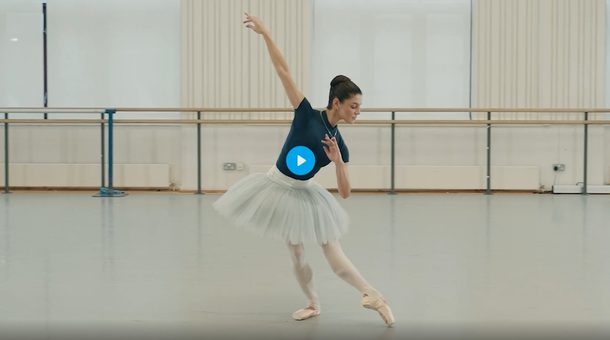
Artist Matilde Rodrigues and Clinical Director Dr Nick Allen explore the importance of nutrition in supporting dancers' performance, recovery and overall wellbeing at BRB.
Matilde Rodrigues on fuelling for performance: a dancer’s approach to nutrition on tour
For me, preparation starts first thing in the morning. If I have the time, I always make porridge. I’m quite organised when I travel on tour, so I take everything I need with me. Even in a hotel room without a stove or microwave, I’ve found a simple way to make it using boiling water from the kettle, oats and protein powder. I’ll add things like dark chocolate, nut butter and fruit, and have it with a coffee. That’s my go-to breakfast. On busier days, I adapt. If I’m rushing, I’ll take everything to the theatre and have something like granola and yoghurt instead. It’s about being flexible while still making sure I’m fuelling properly.
Before a performance, I’ve found that lighter options work best for me. A yoghurt bowl with dates, dark chocolate and nuts is ideal – it doesn’t feel heavy, but it’s satisfying and gives me steady, sustained energy without spikes. When I’m on tour, I prepare small bags of ingredients in advance so it’s quick and easy to put together. I also keep protein bars on hand as a reliable snack, especially straight after a show when I need something immediate.
What I eat before a show depends on the schedule. On single show days, when I have more time to digest, I enjoy something more substantial like a salmon salad. I love vegetables, but I’ve learned to balance that, because too much fibre before performing can feel uncomfortable. On double show days, I opt for lighter, more easily digestible foods that still provide energy.
Touring adds another layer of challenge. You don’t always have access to the foods you’d usually prepare, so it’s about making smart choices when eating out or picking up ready meals. I often go to Marks & Spencer because they offer balanced, nutritious options that support recovery and performance.
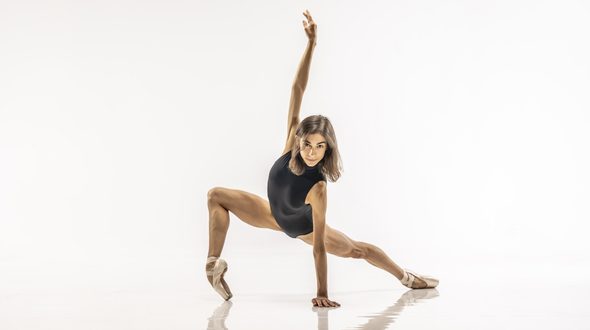
Image gallery
A gallery slider
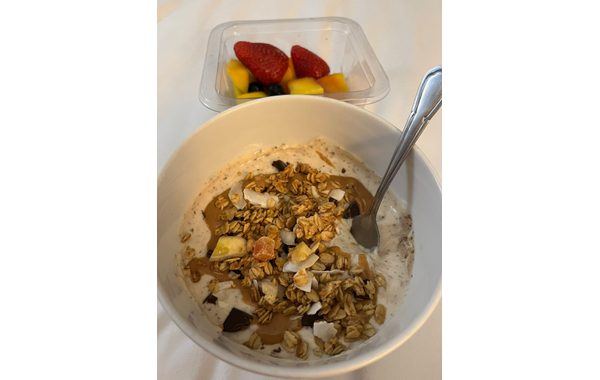
One of Matilde's yoghurt bowls on tour.
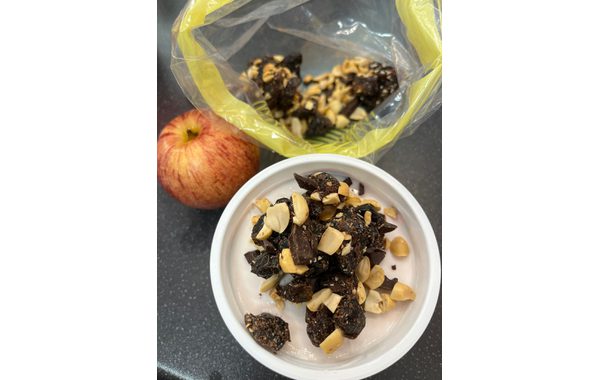
One of Matilde's yoghurt bowls on tour.

Matilde's salmon salad on tour.

One of Matilde's restaurant picks on tour: fish pie.
After a show, I usually crave something sweet. I’ll make another yoghurt bowl with fruit like mango, some protein powder and flaxseeds, which are great for digestion, especially when eating later in the evening. One thing I’ve learned is that as dancers, we don’t always realise how much energy we’re using. It’s not just the performance itself, it’s the running around backstage, quick changes, long days and constant movement. It all adds up. That’s why it’s so important not to be afraid to fuel more, both before and after performing. Recovery is just as important as preparation.
Hydration is also key. I sip water regularly throughout the day, and during performances I often have coconut water backstage. It’s a natural source of electrolytes and can really help with cramping and maintaining energy levels, especially in physically demanding roles. I also support my training with supplements, particularly when I’m on tour. I take a multivitamin, as well as glucosamine and chondroitin for joint health, vitamin D for bone strength, and creatine to support endurance and delay muscle fatigue.
Nutrition is something I’m really passionate about. Our bodies are our instruments, and how we fuel them has a direct impact on how we perform, recover and feel. This is what works for me, but everyone is different, and no dancer eats the same as another. It’s all about finding an approach that works best for you and that optimises your performance, recovery, and overall health and wellbeing.
Dr Nick Allen on dancer nutrition and the Jerwood Centre’s pioneering AI-led nutrition programme
At its core, nutrition is fundamental. As humans, we have basic needs: we need oxygen and we need energy. If nutrition isn’t right, the impact can be significant, affecting every system in the body. It’s also important to understand that what we consume isn’t necessarily what we absorb. Not all calories are equal – the nutritional value of what you eat matters greatly, as does how and when it’s absorbed. For example, carbohydrate absorption occurs at a rate of roughly one gram per minute, or around 60 grams per hour. There are ways to optimise this, such as combining different types of carbohydrates, but it highlights the importance of having a clear nutritional strategy.
Timing is a crucial factor. The way a dancer fuels three hours before a performance will differ from how they fuel if they have significantly less time. In reality, dancers might still be in rehearsal close to curtain-up, so these environmental constraints must be considered. Fuel that hasn’t had time to digest can leave a dancer feeling heavy and uncomfortable. Alongside this, nutrition is highly individual. Dancers have different preferences, dietary approaches and cultural influences. Across a company of around 60 dancers, there is no one-size-fits-all solution. Each dancer must find what works best for them. Workload is another key consideration. A dancer performing an intense, physically demanding role will have very different energy requirements from someone with less stage time. It’s comparable to the difference between sprinting and running a marathon, each demanding a different approach to fuelling.
Our role within the healthcare team is to support dancers in navigating this complexity. Through the Jerwood Centre, we provide guidance on good nutrition, but we are also developing a more advanced, personalised system. We’re currently working with our dietitian, who also works in the NBA, and a wider team to develop an AI tool that allows dancers to take ownership of their nutrition. The system will factor in workload, intensity, sleep, mood and overall vitality and wellbeing, learning from the data over time, with the aim of generating tailored nutritional plans that adapt daily. For example, a dancer might plan for a demanding rehearsal day but end up marking instead, or unexpectedly step into a physically intensive role. The system will adjust accordingly, helping them fuel appropriately both retrospectively and in preparation for what’s next. It also accounts for the practical realities of a dancer’s schedule. If a dancer isn’t able to eat at a suggested time due to rehearsal, the system can rework the plan around when they are available. These real-world constraints are central to making any nutritional strategy effective.
Ultimately, our goal is to create a framework that is personalised, flexible and realistic, one that reflects the demands of professional dance and supports each individual in performing at their best.

BRB houses the Jerwood Centre for the Prevention and Treatment of Dance Injuries – a specialised facility for the Company providing world-class medical, rehabilitation, research and educational support to keep our dancers healthy, help them recover from injuries and reach peak performance.
The Jerwood Centre for the Prevention & Treatment of Dance Injuries is generously supported by the Royal Opera House Benevolent Fund.
Find out more about the Jerwood Centre

The Jerwood Centre: the strength behind every step in Swan Lake

Inside BRB’s AI Nutrition Project with Clinical Director Dr Nick Allen

Dr Nick Allen on rest, recovery and preparing for a new season
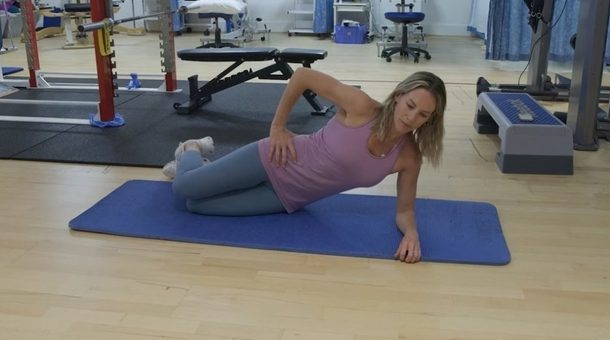
How do dancers train for Swan Lake? Rehabilitation and Conditioning Lead Esther Collacott on her go-to conditioning exercises
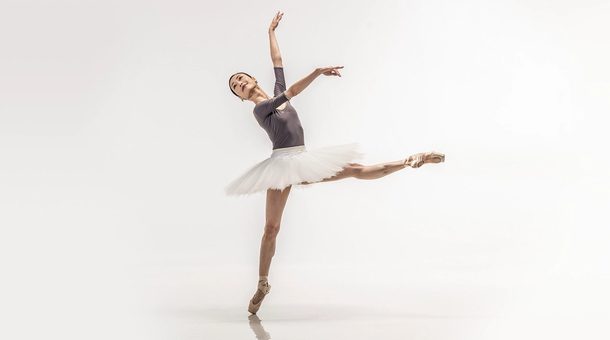
Exploring ballet's hardest moves: the 32 fouettés from Swan Lake

Dealing with injury as a ballet dancer: insights from Hannah Martin and Nick Allen
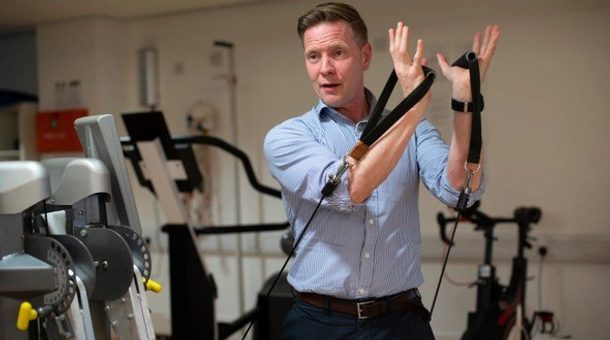
The Jerwood Centre: supporting dancers on tour
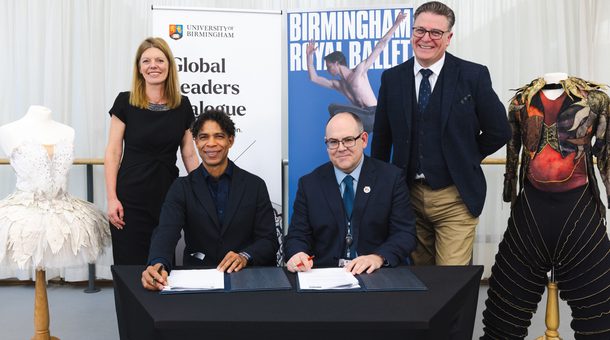
Announcing a strategic partnership with University of Birmingham
Exploring ballet's hardest moves: barrel turns

Post-performance recovery, health and self-care with Matilde Rodrigues
WATCH: The Silence After Applause