News Story
How can technology help dancers make better-informed decisions about nutrition, recovery and their wellbeing? Clinical Director Dr Nick Allen explains the thinking behind BRB’s new AI-powered nutrition support and the research that will shape its development throughout the season.
From research to intervention
This season is an important next step in our overarching research strategy. Last season, we worked hard to establish the prevalence of relative energy deficiency in dance through the series of blood tests we undertake. Over the summer, I analysed that data so that we could better understand the patterns occurring across the company.
What we found was interesting. Some dancers come into the start of the season at risk and improve as the season progresses, while for others, their risk increases as the season goes on. One of the key things this tells us is that we need to deal with individuals. Every individual collectively comes together to create this company, but we have to treat them as individuals.
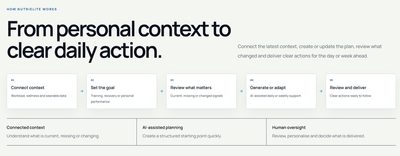
So, this season is essentially our intervention season. Now that we understand more about the extent of what we are looking at and how it presents, we want to see if we can do something about it. That is where the NutriElite support we are offering comes in. The app has been designed to draw on the research we have done around dancers’ workload and energy requirements, as well as the impact this has on various biomarkers identified through our blood testing. It will also learn about each individual dancer – their preferences, the type of diet they like to follow, and even what they have available at home in their fridge or cupboard.
We can then combine all of that information with where we are in our schedule. Are we in a rehearsal period? Are we performing? What is an individual dancer’s workload likely to look like? As we start to bring in more exposure data from our call sheets, the system will be able to understand that workload in greater detail. If a dancer is cast in a particular role, for example, we can understand how much they are likely to be doing in rehearsals that week. The dancer then adds their own information: how well they slept, how they are feeling, what their energy levels are like, and whether they have a niggle or an injury. All of that information comes together to create a daily and weekly nutritional plan.
Planning ahead – and responding in real time
The weekly plan is there to help dancers prepare. If you are going on tour, you can use it to think about what you need to take with you. If you are simply going to the shops or ordering your food for the week, it can help you understand what you might need to have in your fridge. But it is not a static plan. If something changes, the dancer can update the app. If they have had a particularly busy or demanding day, for example, they can input that information and the plan can adjust accordingly to support their recovery and help them prepare for the following day. So there is an element of forward planning, but also reactive planning. We want the support to respond to what is actually happening to that individual dancer.
Understanding whether it works
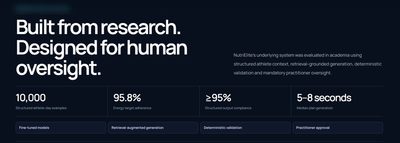
The work we carried out at the end of last season and through the summer is now being put into practice. The dancers were introduced to the app when they returned for the new season, signed up and began interacting with it. But this is also an active piece of research.
We will be building our understanding of its impact throughout the year. In research, you often want to establish cause and effect by removing other variables and identifying exactly what caused a particular change. In real life, however, it doesn't work like that. We are all influenced by a huge number of factors. So rather than trying to isolate one individual factor, we will look at trends and correlations across a number of different variables.
We will look at how often dancers interact with the nutritional advice. Did they follow the recommendation yesterday? If not, why not? Perhaps they didn't have time, didn't like the recommendation or it simply didn't fit with them. Those answers are important because they help us understand how the system can work better for the individual.
We can also start to look at whether there are differences between dancers who engage with the nutritional advice more frequently and those who don't. We can look at things such as injury rates and changes in blood test results, while recognising that there are many factors that can influence these outcomes. The aim is to keep learning throughout the season.
Supporting better decisions
Relative energy deficiency is not simply about nutrition. There's a psychological element to it too, because some people will make a decision to fuel or not to fuel. That is why we want there to be an educational element behind the app. It won't simply tell you what to do. It will explain why it has made a particular recommendation and why that recommendation is important.
For female dancers who choose to record their menstrual cycle within the app, for example, there is the capacity to provide an alert if they go beyond 35 days without a menstrual cycle, prompting them to speak to the medical team.
Ultimately, we want to support behaviour and decision-making, while recognising that every individual still has to make their own choices. This is why we are also working with our psychology colleagues to understand how a tool like this can support positive decision-making. We want to look at it from a physiological perspective – making sure dancers have the energy they need for good metabolic and performance function – but also consider the psychological factors involved.
It is a very broad, multi-faceted approach because this isn't just about performance. It is about the whole person.
A project with potential beyond dance
It is a very ambitious project, and we are incredibly grateful to NutriElite for their support and commitment to developing the app around the real needs of our environment. What makes it particularly exciting is the potential for this work to translate beyond dance.
There are wider public health issues around the pressure that some people can feel to look a certain way and how that pressure can affect decision-making. If we can develop tools that help people achieve healthy outcomes while still giving them the capacity to be who they want to be, something like this could have a much wider impact.
We have already been discussing this with colleagues in public health, including how this work could support young people at a critical time for their bone health. Adolescence is such an important period for developing peak bone mineral density, so supporting healthy behaviours earlier in life could have implications much further down the line. That is why working with a population such as dancers, who can be at increased risk of relative energy deficiency, has the potential to teach us much more broadly about how we can support health and wellbeing.
A team effort
There is a huge team behind this project. We are working directly with Mandy Tyler, a dietitian who is incredibly passionate about dance and also works with the Texas's NBA team, San Antonio Spurs. She is one of the best dietitians in the world. Professor Matt Wyon, Professor of Exercise Physiology at the University of Wolverhampton, and Professor Jennifer Cummings, Professor of Sports Psychology at the University of Birmingham, are research partners.
We also have Dr Zaki Hassan Smith, Consultant Endocrinologist at University Hospital Birmingham, and Rachel Webster, Consultant Clinical Scientist at University Hospital Birmingham, as research partners. Dr Wayne Diesel is an advisor on the project, and was also my former boss, so it's been incredible to work with him again. And there are many more people contributing, including the team here at The Jerwood.
It takes a huge number of people with different areas of expertise to make something like this happen. But if we can demonstrate that it works and show how effective it can be, it could ultimately become a self-sufficient system that supports dancers, the wider sector and potentially society more broadly.
For me, that is what makes this such an exciting year. We aren't going to wait until the end of the season to decide whether it has worked. We will be working with it throughout the year, continually learning and evolving how it works. The goal is very simple: that when an individual dancer is sitting in front of me in my office with challenging energy levels, we have a tool that can help support them.
Find out more about The Jerwood Centre

The Jerwood Centre: the strength behind every step in Swan Lake
Dr Nick Allen on rest, recovery and preparing for a new season
How do dancers train for Swan Lake? Rehabilitation and Conditioning Lead Esther Collacott on her go-to conditioning exercises
Exploring ballet's hardest moves: the 32 fouettés from Swan Lake

Dealing with injury as a ballet dancer: insights from Hannah Martin and Nick Allen
Fuel for performance: inside dancer nutrition at Birmingham Royal Ballet
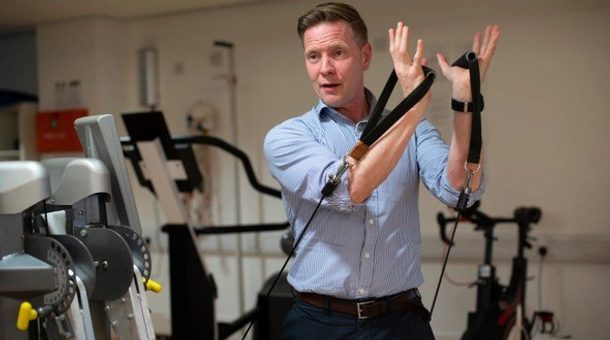
The Jerwood Centre: supporting dancers on tour
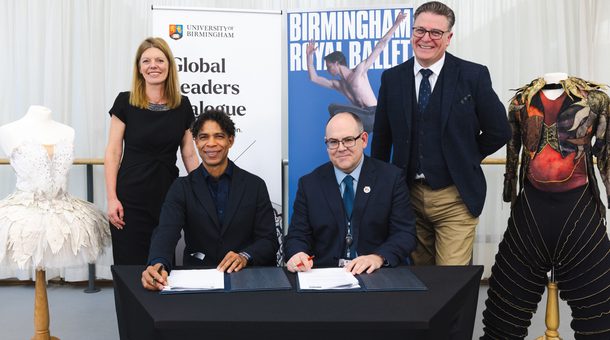
Announcing a strategic partnership with University of Birmingham
Exploring ballet's hardest moves: barrel turns

Post-performance recovery, health and self-care with Matilde Rodrigues
WATCH: The Silence After Applause